
An email blast—also called a mass email or e-blast—is when you send the same email to a large group of subscribers at once.
While it can be effective for time-sensitive announcements, most modern email marketers consider traditional blasting an outdated strategy. Here's why, and how to do it right.
At a glance
What is an email blast?
An email blast (also called a mass email or bulk email) is a single email sent to a large list of subscribers at once, without segmentation or personalization.
When to use them:
Best reserved for urgent, universally relevant messages — think flash sales, major product launches, or critical company announcements.
How to do it right:
Use a professional email service provider and follow anti-spam regulations. Full guide below 👇
Table of Contents
- What is an email blast?
- Pros and cons of email blasts
- Email blast vs. email newsletter: Which should you use?
- Spam: a potential email blast pitfall
- How to do it right: 3 email blast examples
- How do you send an email blast the right way?
- Best free email blast templates
- Start sending smarter email blasts with Brevo
What is an email blast?
An email blast, also known as an e-blast or mass email, is a message sent to a large group of recipients at once. It’s a way to broadcast your message to your entire email list. Email blasts are often used for announcements, promotions, or sharing news updates.
How does an email blast work?
Imagine you have a big announcement to make. An email blast lets you send that message to your entire email list in one go.
Usually, email blasts don’t involve granular segmentation or marketing automation. Simply craft your email and hit send. Then, all your subscribers will receive it like a digital broadcast.
Pros and cons of email blasts
The term email blast might sound a bit aggressive in today’s world of hyper-personalization, but the tactic itself is still a major part of the marketing toolkit. Like any tool, its effectiveness depends entirely on how—and when—you use it.
To help you decide if a mass send is the right move for your next message, let’s look at the trade-offs.
Pros: Why marketers still use email blasts
There’s a reason blasting hasn't gone away: it’s the fastest way to get a single message in front of your entire audience.
- Maximum efficiency: If you need to announce a flash sale that ends in four hours or a sudden change to your store's opening times, you don't always have time to build complex segments. A blast gets the word out instantly.
- Broad reach for universal news: Some messages are genuinely meant for everyone. Company-wide updates, annual holiday greetings, or updated Terms of Service are "one-size-fits-all" moments where a blast is the most logical choice.
- Low technical barrier: You don’t need to be an automation expert to send a mass email. It’s a straightforward "upload, write, and send" process that works well for small teams with limited time.
Cons: Why blasting can be risky
While efficient, sending the exact same message to every single person on your list comes with significant risks to your sender reputation and your results.
- The deliverability trap: When you send to your entire list, you’re inevitably emailing people who haven't opened an email from you in months. High bounce rates and low engagement from these cold contacts signal to providers like Gmail and Yahoo that your content might be spam.
- Lower engagement: Content designed for everyone is rarely perfect for anyone. Without personalization, your open rates and click-through rates (CTR) will almost always be lower than they would be in a targeted campaign.
- Higher unsubscribe rates: If a customer signed up for product updates but keeps receiving daily news blasts that aren't relevant to them, they’ll eventually hit the unsubscribe button to clean up their inbox.
- Compliance risks: Mass sends are under a microscope. If you aren't strictly following regulations like the CAN-SPAM Act or GDPR—such as including a clear physical address and a one-click unsubscribe link—you risk heavy fines and being blacklisted by major ISPs.
In short: Email blasts are best used for urgent, universally relevant news. For everything else, a little bit of segmentation goes a long way in keeping your audience happy and your emails out of the spam folder.
Email blast vs. email newsletter: Which should you use?
Is an email blast the same as an email newsletter? Not exactly. While there’s overlap, email blasts and newsletters have some key differences.
Email blasts are single emails that focus on delivering one specific message and driving direct action (e.g., purchase, sign-up, website visit). Because they are designed to "push" information out quickly, they often lack deep personalization and rely on a one-to-many approach.
Email newsletters, on the other hand, are about building a long-term relationship. They are usually sent on a consistent schedule (weekly or monthly) and provide a curated mix of value-first content—like industry tips, blog roundups, or community stories. A newsletter "pulls" the reader in by being helpful, not just promotional.
Spam: a potential email blast pitfall
Email blast campaigns can be extremely effective. However, they can come across as spammy if you're not careful.
The reality of modern email marketing is that blasting is now a high-stakes game. Because these emails reach everyone on your list regardless of their specific interests, they are prone to two major pitfalls:
1. The human spam filter (user perception)
Spam isn't just a technical category; it's a feeling. When a subscriber receives an irrelevant email blast, they don't always just ignore it—they get annoyed. And in today’s cluttered inboxes, an annoyed user is only one click away from the "Report Spam" button.
If even a small percentage of your list reports your blast, it sends a massive red flag to providers like Gmail, potentially causing all your future emails (even the important ones) to bypass the inbox entirely.
2. The technical wall (sender requirements)
ISPs have become significantly more aggressive in how they filter bulk mail. That’s why you should stay ahead of the Gmail and Yahoo sender requirements that went into full effect in 2024.
These requirements are for senders who send 5,000 emails per day and more. If you don’t follow these rules, your email blasts might get sent straight to the spam folder. Your account might even get blocked.
In short: If you treat an email blast as a lazy way to reach people, you will likely pay for it with your sender reputation. To succeed, you should treat every mass send with the same technical rigors and compliance standards as a high-budget campaign.
Further reading: The best email blast services compared.
How to do it right: 3 email blast examples
When done correctly, a blast doesn't feel like an intrusion. The following examples represent companies that have found the sweet spot: they use mass emails sparingly, ensuring that when they do hit "Send to All," the content is high-value and impossible to ignore.
Webinar promotion
Airtable sent this email blast to encourage people to sign up for their upcoming webinar. This email blast is effective because it’s super clear.
The subject line tells you the topic and date right off the bat. The email itself is also easy to read, with a "Register Now" CTA button that's hard to miss.

Product promotion
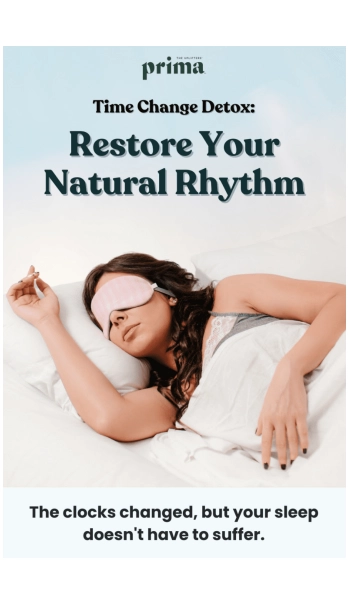
Prima's email blast uses a clever marketing strategy. It capitalizes on a timely event — the switch from daylight savings time in the US.
This approach is creative and taps into a relevant pain point (sleep disruption) that many people experience during time changes.
Flash sale
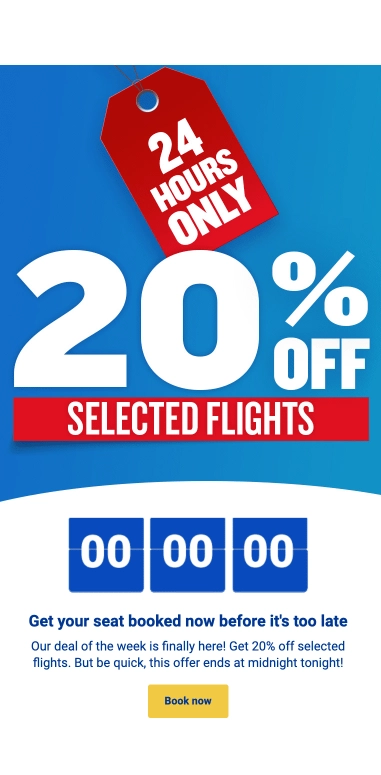
Here’s the most classic email blast tactic: a flash sale. In this example, Ryanair offers a 20% discount on selected flights for a limited time.
The hero section showcasing the deal is likely the first thing recipients see. This grabs attention and quickly conveys the offer. The countdown timer also adds a sense of urgency, encouraging recipients to book before the discount ends.
How do you send an email blast the right way?
If you’ve decided that a mass send is truly the best move for your message, the next step is execution. But remember: the goal isn't just to blast your list but to deliver a message that actually gets acted upon without triggering a wave of unsubscribes.
1. Avoiding sending email blasts via Gmail
Although it’s a popular email client, it’s best to not send mass emails in Gmail. There are many reasons for this.
If you don’t have a Google Workspace plan and your sender address ends in @gmail.com, you’re limited to 500 emails per day and a maximum of 100 addresses per email.
Even Gmail’s paid plans are limited. They have a daily cap on mass emails — a maximum of 1,500 emails per day.
Moreover, Google Workspace doesn't include a built-in design editor. You'd have to compose your emails in plain text. This could make it harder for promotional emails to stand out.
On top of that, Gmail doesn’t offer advanced email marketing features. You’ll be lacking list management, email automation workflows, email design tools, and other critical features.
2. Use an email service provider
The best way to send email blasts is by using an email blast service, or better yet, a professional Email Service Provider (ESP).
An ESP doesn't just send the mail; it acts as a layer of protection for your domain reputation. It handles the heavy lifting of authentication (DKIM, SPF), manages your unsubscribes automatically (a legal requirement), and provides the analytics you need to see if your email blast actually worked.
Brevo is designed to help businesses manage this balance between broad reach and high deliverability. Here is how a professional platform helps you send responsibly:
- Built-in compliance & deliverability: The most critical role of an ESP is ensuring you follow regulations like GDPR and the CAN-SPAM Act. Brevo’s infrastructure is optimized to help your emails meet the strict sender requirements of major providers like Gmail and Yahoo, reducing the risk of your messages being flagged as spam.
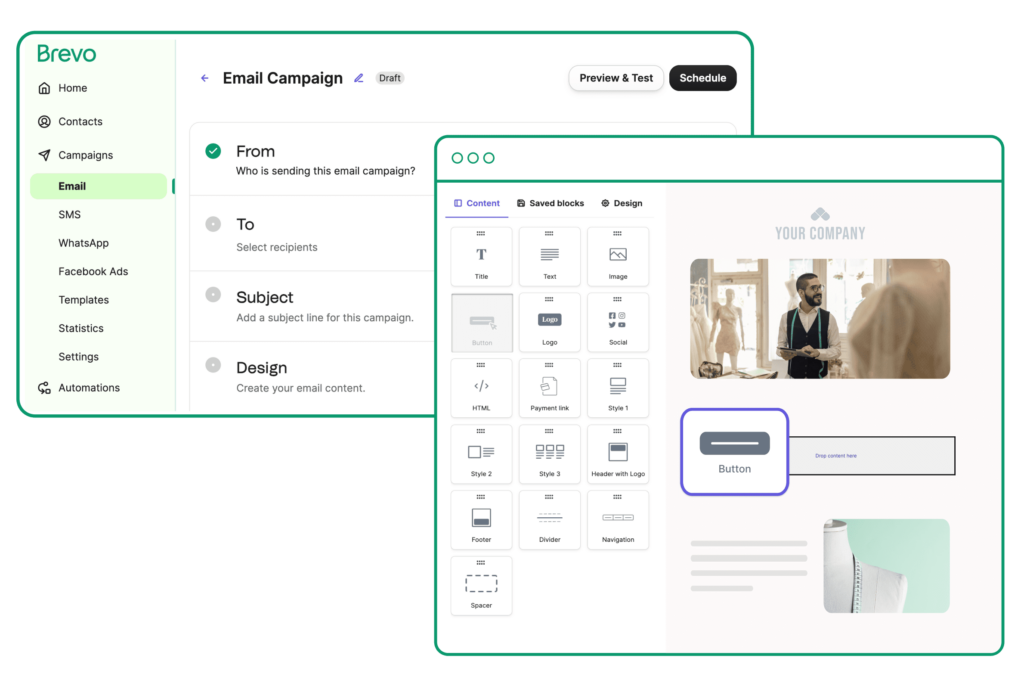
- Intuitive design tools: Sending a mass email shouldn't be a technical hurdle. Using a drag-and-drop editor and mobile-responsive templates ensures that your blast looks professional on every device.
- A growth path beyond blasting: As your strategy matures, you’ll likely want to move away from unsegmented blasts. A professional ESP provides the tools to transition smoothly into dynamic segmentation, A/B testing, and automated workflows (like welcome series or abandoned cart reminders) that drive higher engagement than a standard mass send.
- Accessible entry point: For those just starting out, Brevo offers a free plan that allows for 300 emails per day, providing a risk-free environment to test your first campaigns and monitor your deliverability before scaling up.
Setting up an email blast in Brevo
3. Stick to the anti-spam regulations
Before you create your first e-blast, you need to make sure your account is set up properly to pass spam filters.
We’ve already touched upon the new policies for bulk senders and what you should do to comply with them. But in case you’ve missed that part, here's a recap of the crucial steps to start things off right:
- Set up email authentication protocols (SPF, DKIM, and DMARC) to prove your identity as the sender.
- Use double opt-in to make sure you don’t send messages to incorrect emails. In your subscription forms, you should also make it clear what users are signing for.
- Add a one-click unsubscribe link to every email blast. Brevo makes this easy by automatically including an unsubscribe link in every email. Even if you accidentally remove it while designing your email, it will be added back in when the message is sent.
4. Build and segment your list
We’ve already touched upon the importance of building an email list (i.e. by using double opt-in forms). Next, let’s see how to put it into practice.
To build a mailing list, you need three things:
- An incentive: Give people a reason to subscribe. This could be a discount code, a free ebook, access to exclusive content, or early bird notification for sales.
- A signup form: Place signup forms strategically on your website and landing pages. Keep them concise and ask for only essential information (like name and email address).
- CRM software: This is where the data from your signup form will be stored.
Ideally, your email blast service should include a form builder. This will save you the hassle of switching between platforms. Brevo, for example, lets you set up a compliant subscription form in just a few clicks.
Another benefit of using Brevo is that it’s more than an email marketing tool. It’s an all-in-one CRM system. That means that you don’t need to set up any integrations to capture, segment, and nurture your contacts — all this can be done through Brevo.
When you’ve set up your subscription form, use email segmentation. While email blasts don’t need granular segmentation, you could segment your lists based on basic demographics.
For instance, if your products aren’t gender-neutral, you can group your email subscribers by gender. Then, set up targeted blasts for each segment.
5. Create eye-catching email content
Once you have a sizable subscriber list, you can finally create your first blast email. Here are a few tips when it comes to the email content.
- Start with a compelling email subject line. You need a subject line that grabs attention while accurately reflecting your email's content. Not sure how to craft one? Ask Brevo’s AI assistant to generate it for you.
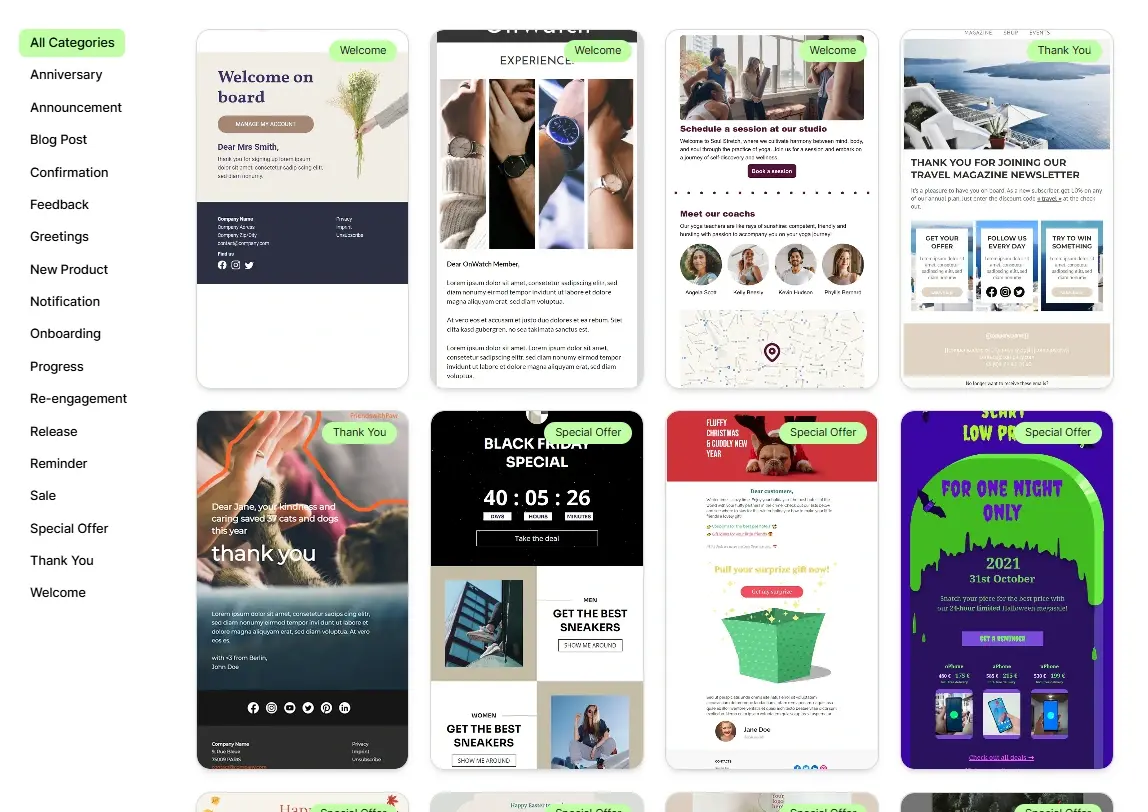
- Choose a professional-looking email template. In Brevo, you don’t have to build your emails from scratch. Use a pre-made email template to save time. Focus instead on crafting a persuasive message.
Brevo’s free email template gallery
- Design personalized emails. The easiest way to personalize your email message is by including the recipient's name in the subject line or email body.
- Include a clear call to action (CTA). What do you want recipients to do after reading your email? Make your CTA button prominent and use action-oriented language.
6. A/B test your email marketing campaigns
If you're new to email blasts, your first campaign might not meet all your expectations – and that's okay. Finding what works best for your audience takes experimentation.
To learn what works best for your contacts, always A/B test your email marketing campaigns. Follow this process to set up your first A/B test:
- Choose what you want to test. Start by testing one element at a time. Common options include subject lines, call-to-action (CTA) button text or design, or email copy.
- Create two versions. Design two versions of your email, with only the chosen element being different.
- Set up the test. Most email marketing platforms, including Brevo, have A/B testing features. Configure the test, selecting whether you want to optimize for the best open rate or click-through rate.
- Analyze the winner. After the test runs, review the results. Which version performed better in your chosen metric?
- Apply your learnings. What made the winning version more successful? Was it a sense of urgency, better personalization, or a more compelling image? Integrate these insights into your future email blasts.
Note: In Brevo, you can set up A/B test campaigns only after you reach your new subscribers with a regular campaign at least once in the past.
Further reading: How to start using a subject line tester and boost your open rates.
7. Maintain your sender reputation
Your sender reputation is like a trust score that email service providers (Gmail, Yahoo, etc.) assign to your email-sending IP address. It's determined by several factors:
- Email authentication. Setting up SPF, DKIM, and DMARC protocols proves you're a legitimate sender.
- Open rates. The number of people who open your emails signals engagement. The more, the better.
- Click-through rates. Similarly, good click rates show people find your content valuable.
- Bounce rates. Bounces (emails that can't be delivered) happen, but a high bounce rate suggests your list isn't clean.
- Spam complaints. This is the red flag. When people frequently mark your emails as spam, your sender reputation takes a major hit.
In sum: your sender reputation directly impacts email deliverability. To protect your reputation, focus on maintaining a clean mailing list and sending relevant content.
Best free email blast templates
If you choose to use Brevo to send your email blasts, you’ll get access to 40+ free email templates for all types of email.
Here are just a few examples you can use to send effective email blasts.
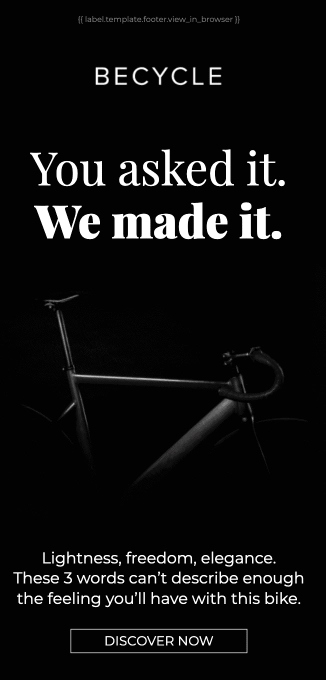
Product release email blast template
This template is ideal for ecommerce product releases. It lets the visuals do the heavy lifting, minimizing the need for lengthy descriptions.
The brief headline and call-to-action button keep the message concise and free of distractions. This avoids overwhelming the reader and keeps the focus on the product itself.
Special offer email blast template
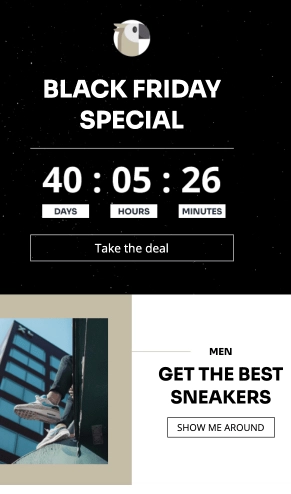
This template lets your offer do the talking. The countdown timer grabs attention and makes the deal's limited availability crystal clear. With a bold "Take the Deal" button, it encourages a recipient to take immediate action.
Feedback collection email blast template
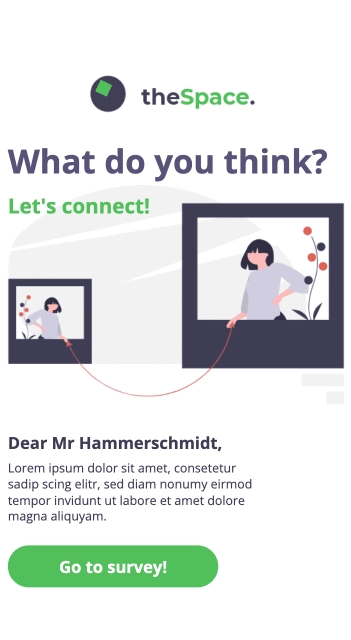
Need feedback fast? This template gets straight to the point with a clean design, bright colors, and a clear call to action. It's perfect for high-engagement feedback blasts.
Start sending smarter email blasts with Brevo
The reality of modern email marketing is simple: the best blast is often not a blast at all. Segmented, targeted campaigns consistently outperform mass sends when it comes to open rates, click-throughs, and subscriber engagement.
That said, there will always be moments when a broad send makes strategic sense. When those moments arrive, the difference between inbox delivery and the spam folder comes down to one thing: doing it responsibly.
Brevo's email marketing platform is built to support both sides of this equation. With Brevo, you'll have access to:
- deliverability infrastructure
- automation tools
- compliance safeguards that keep your sender reputation intact
- a free plan with up to 300 emails per day