
Most growing businesses don't lack customer data — they lack a way to act on it in real time.
Email lives in one tool, chat in another, SMS somewhere else, and the customer's actual behavior sits in a CRM nobody checks during the moment that matters. A customer engagement platform closes that gap: it brings your channels and customer data into one system, so you can respond to what a customer does right when they do it.
This guide compares some of the best customer engagement platforms on the market so you can see how they differ on features, ease of use, and who they're actually built for.
The information in this article was last updated on Juli 13, 2026.
Table of Contents
- At a glance: Comparing the best customer engagement platforms
- What is a customer engagement platform?
- Key features of a customer engagement platform
- Our methodology at Brevo: How we tested
- Top customer engagement platforms to consider
- Benefits of using a customer engagement platform
- How to choose the right customer engagement platform
- Find the best customer engagement platform for your business
At a glance: Comparing the best customer engagement platforms
No time to read? Here's a quick overview of the top customer engagement tools. This simple price and rating comparison will give you a better idea of what to expect from each one.
| Customer engagement platform | Pricing | Trustpilot rating | Best for |
|---|---|---|---|
| Brevo | Free forever; paid plans from $9/month | 4.0 | Growing businesses that want an all-in-one platform |
| Twilio | Pay-as-you-go, usage-based | 1.1 | Technical teams building a custom engagement stack |
| Braze | Custom quote only | 2.8 | Large-scale, cross-channel personalization |
| HubSpot | Free CRM; paid Hubs separate. Smart CRM starts at $45/month. | 1.7 | Teams that want CRM, marketing, and service in one place |
| Salesforce | Starter from $25/user/month; Marketing Cloud custom | 1.4 | Enterprises already in the Salesforce ecosystem |
| Netcore Cloud | Custom quote only | 3.1 | Ecommerce and D2C brands |
| Creatio | From $40/user/month + $10K/year minimum | 3.6 | Mid-market and enterprise teams |
| Maestra | Custom, from ~$1,300/month | No reviews yet | Ecommerce brands wanting hands-on personalization |
What is a customer engagement platform?
A customer engagement platform (CEP) is software that unifies customer data and communication channels — email, SMS, chat, push notifications, and more — into one system, so businesses can track and respond to customer behavior across every touchpoint.
For example, a retailer might use one to trigger a personalized discount the moment a shopper abandons their cart, rather than sending a generic follow-up days later.
For a full guide on customer engagement, see our dedicated blog article.
Key features of a customer engagement platform
Looking across customer engagement platforms, a few capabilities show up consistently. They're worth knowing before you compare tools.
Omnichannel messaging: The ability to reach customers across email, SMS, WhatsApp, push, and in-app messaging from one system, rather than managing each channel separately. See these omnichannel campaign examples for real-world inspiration.
Workflow automation and journey orchestration: Trigger-based workflows that respond to customer behavior automatically (e.g. a cart abandonment, a support ticket, a first purchase) instead of requiring a manual send. See these marketing automation workflow examples for ideas to get started.
Unified customer data: A single view of each customer that pulls together behavior, purchase history, and preferences from every channel, so messaging can be personalized rather than generic.
Analytics and reporting: Visibility into what's actually working (open rates, click-through rates, conversions, campaign ROI) so you can adjust rather than guess.
Personalization and segmentation: The ability to group customers by behavior or attributes and tailor content accordingly, rather than sending the same message to everyone. Need inspiration? Browse these customer segmentation examples.
You’ll see that not every platform implements these the same way. That's part of why the right choice depends on your team's size and workflow, not just which tool has the longest feature list — but more on that later.
Choosing a platform is only half the picture — see how to build the customer engagement strategy that runs on top of it.
Our methodology at Brevo: How we tested
This article covers the best customer engagement platforms including our own platform, Brevo. Our suggestions are based on our own research and testing. We don't earn commissions from any links on this page. To learn exactly how we evaluate tools, check out our dedicated methodology article.
Please note that the features listed here are just a selection of what each software offers. For exact pricing and a full, up-to-date feature list, check the providers' websites.
Top customer engagement platforms to consider
To build this list, we looked at platform breadth (channels supported), pros, cons, and pricing. Here's how eight leading customer engagement platforms compare.
Brevo — Best for growing businesses that want an all-in-one platform
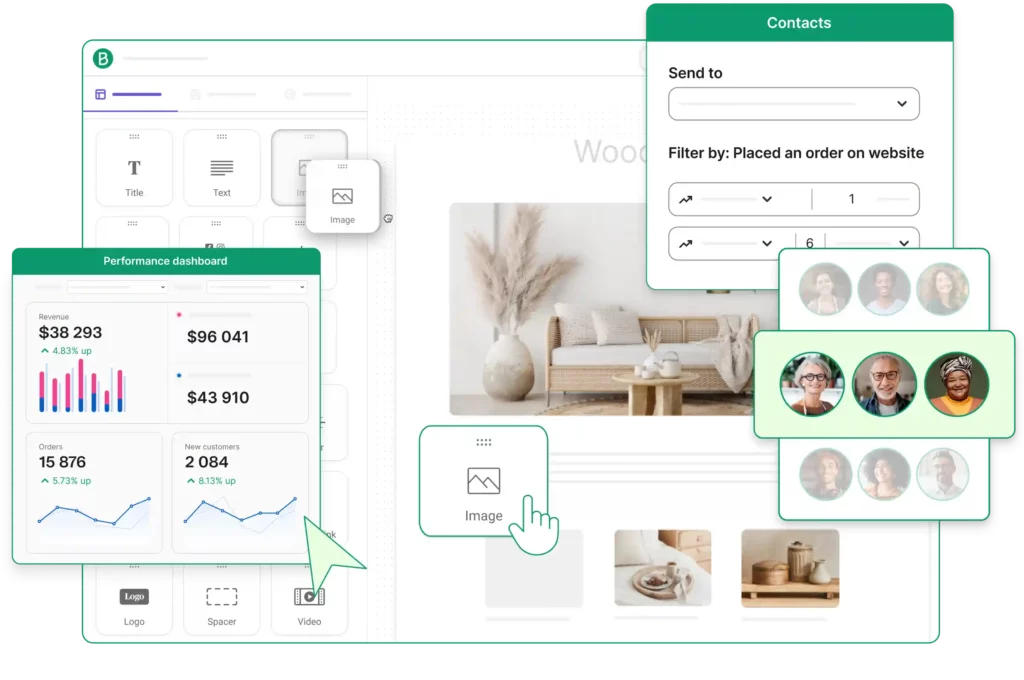
Brevo is a customer engagement platform that unifies email, SMS, WhatsApp, push, and more in a single tool, plus a built-in CRM, live chat, and transactional email. It's built for growing businesses that want one platform instead of several. Brevo runs alongside more than 300 other digital tools, so it fits into an existing stack without a heavy migration.
Brevo’s affordable, self-serve platform is a strong fit for small businesses, while its Professional and Enterprise plans serve enterprise-level needs as well — with SAML SSO, dedicated IPs, priority support, and a dedicated account manager.
Key features:
- Email marketing
- Transactional email (SMTP & API)
- SMS, WhatsApp, Web/mobile push
- Marketing automation
- Aura AI (email creation, send time optimization, automatic segmentation)
- Segmentation
- Landing pages
- CRM
- Live chat & chatbot
- CDP
- Wallet
- Phone
- Sales management
Pros:
- All core channels and CRM bundled into one platform rather than sold as separate tools
- 99% email delivery rate with dedicated deliverability infrastructure
- Generous free plan
Cons:
- Advanced features (multi-user access, contact scoring, AI segmentation) are gated to higher tiers
- CRM is lighter-weight than dedicated sales-only platforms
Price:
Free forever plan available (up to 300 emails/day, 100,000 contacts). Paid plans start at $9 for 5,000 emails per month.

Exceeding Expectations: A Five-Star Experience with Brevo
"I recently had the pleasure of using Brevo's services, and I must say, my experience was nothing short of exceptional, meriting a full five stars. From the outset, the team at Brevo demonstrated unparalleled professionalism and dedication to customer satisfaction. Their attention to detail and commitment to providing tailored solutions truly set them apart in their field. What impressed me the most was the seamless integration of their services into my existing workflow, which significantly improved my operational efficiency without any hitches. The support team deserves a special mention for their prompt responses and the comprehensive support they provided throughout the process, ensuring a smooth and hassle-free experience. Moreover, the quality of the product exceeded my expectations. It's evident that Brevo invests heavily in research and development to stay ahead of industry trends and offer the most innovative solutions to their clients. This forward-thinking approach is something I greatly appreciate. In conclusion, my experience with Brevo was outstanding. Their blend of cutting-edge solutions, customer-focused service, and expert support makes them a top-notch service provider in their industry. I would highly recommend Brevo to anyone looking for superior services that deliver tangible results."
Bob,
Brevo user
"Several Sales and Marketing Tools in One System"
"We stumbled upon Brevo by accident as we were using a system just for sending marketing emails. We discovered quickly that Brevo offered multiple different digital sales and marketing tools to enhance both our manual branded client engagement tasks, but also offered automation tools to aid our day to day sales efforts. Brevo has allowed us to move away from three other, separate systems and we now use Brevo for all our outbound sales and marketing endeavours. This has saved us a lot of time and money and has increased our output. The system is easy to use and the support is excellent and prompt."
Stephen Day,
Brevo user
"Really efficient support"
"Really efficient support. They answer pretty quickly to every situation and try to find the best possible solution to every problem."
Driss Hafid,
Brevo user
"Brevo has most of the tools a small business needs"
Brevo has most of the tools a small business needs for marketing and sales at a very reasonable price, without limiting your list growth. It has email marketing, CRM, transactional emails, SMS, live chat, Meta ad management, and WhatsApp messages. All this in a package that’s easy to use and grows with your business.
Mor Mester,
Email Marketing Expert
Twilio — Best for technical teams building a custom engagement stack
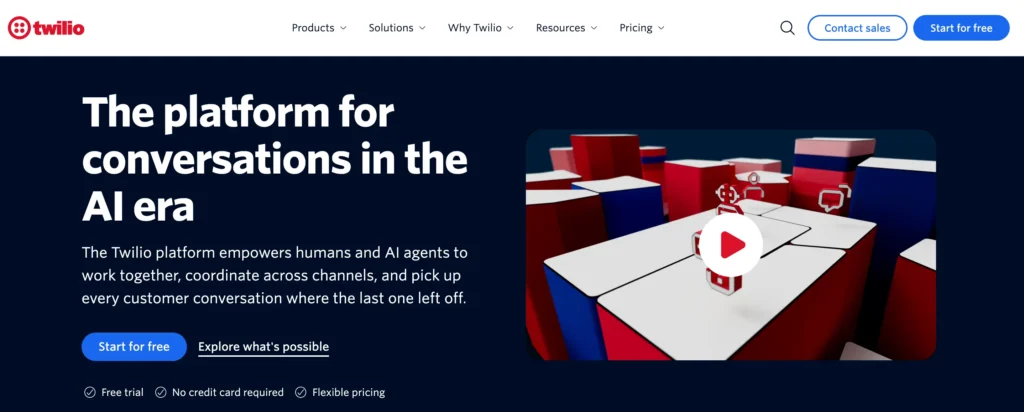
Twilio's customer engagement platform connects communication channels, customer context, and AI on one flexible platform. It's positioned for technical teams that want to build a highly tailored engagement stack rather than use an out-of-the-box tool.
Twilio tends to suit companies with in-house engineering resources or a dedicated developer relationship, since its value comes from configuring APIs and building custom workflows rather than clicking through a pre-built interface. This makes it a strong fit for tech-forward businesses, SaaS companies, and platforms that need to embed messaging directly into their own product — but a heavier lift for a small marketing team without technical support.
Key features:
- Email API
- Email marketing (via SendGrid)
- SMS, WhatsApp, RCS, and voice messaging
- Engage: Audiences, Journeys
- Conversational AI
- Verify & Lookup (authentication/identity)
Pros:
- Extremely flexible and customizable
- Strong developer tooling and documentation
Cons:
- Developer/API-first orientation means more setup work than an out-of-the-box tool
- Best suited to teams with engineering resources rather than marketers working solo
Price:
Free trial available, no credit card required. Flexible, pay-as-you-go pricing that scales with usage; full pricing details require checking Twilio's pricing page per product.
Looking specifically at messaging APIs? Compare Twilio against the best MessageBird alternatives.
Looking for data unification specifically rather than engagement tools? Compare the best customer data platforms instead.
Braze — Best for large-scale, cross-channel personalization
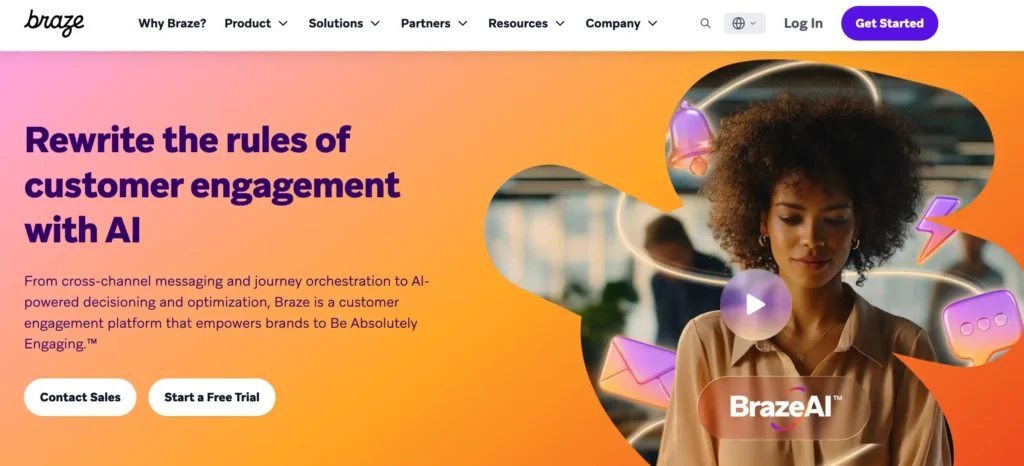
Braze is a customer engagement software built around cross-channel messaging, journey orchestration, and AI-powered decisioning, designed to scale with companies of all sizes. It positions itself as an all-in-one platform for unifying data and acting on it in real time, rather than a point solution for a single channel.
Braze is especially suited to consumer apps and mobile-first businesses that need deep personalization across push, in-app, and messaging channels at high volume. Given its custom pricing and setup requirements, it tends to be a better fit for mid-market and enterprise teams with dedicated marketing ops resources than for smaller, self-serve buyers.
Key features:
- Cross-channel messaging (email, mobile app, web, SMS/RCS, WhatsApp, LINE, KakaoTalk)
- Journey orchestration
- BrazeAI (Decisioning Studio, AI agents)
- Reporting & analytics
- Creative Studio (content/design workflow tool)
- Braze Data Platform (unify and activate customer data)
Pros:
- Wide channel coverage under one platform, including less common channels like LINE and KakaoTalk for international/APAC reach
- Strong emphasis on real-time, AI-driven personalization rather than static, scheduled campaigns
Cons:
- No public pricing — requires a sales conversation to get a quote
- Feature depth and AI tooling are geared toward teams with dedicated marketing ops support, less suited to solo marketers
Price:
Custom quote based on usage (typically monthly active users/contacts and message volume); no self-serve pricing published on-site.
Curious how a CDP works? Read more in our guide explaining what a customer data platform is.
HubSpot — Best for teams that want CRM, marketing, and service in one place
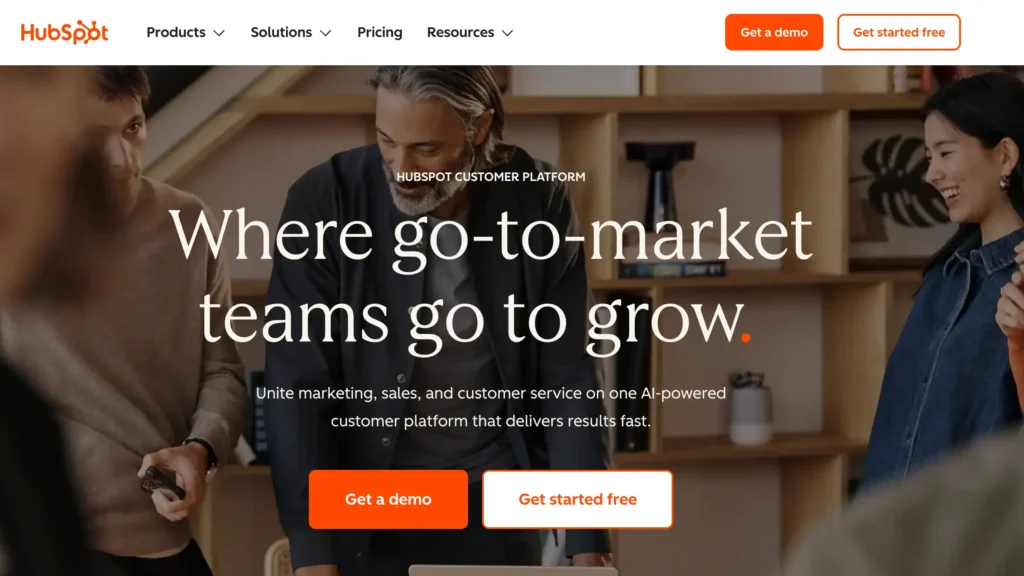
HubSpot is a customer platform designed to scale with your business, unifying marketing, sales, customer service, data management, and content on one agentic platform. It's built on top of HubSpot's Smart CRM, with Breeze AI agents woven throughout.
HubSpot is a natural fit for businesses that want sales, marketing, and support working from the same CRM record rather than separate systems, and the free CRM tier makes it especially accessible for smaller businesses just starting out. That said, costs climb quickly once you move beyond the free tier into the paid Hubs and more advanced features, so it becomes a harder sell for smaller teams once their needs outgrow what's free — it's better suited to businesses that expect to scale their budget alongside their usage.
Key features:
- Marketing Hub (email, automation, landing pages, SEO tools)
- Sales Hub (pipeline management, sales automation, forecasting)
- Service Hub (ticketing, help desk, customer feedback)
- Content Hub (AI-powered content creation and distribution)
- Data Hub (data sync, data quality, cloud data storage)
- CRM (contacts, deals, live chat)
- Breeze AI agents
Pros:
- All-in-one platform spanning marketing, sales, service, and content — no need to separately buy and integrate point solutions for each function
- Genuinely usable free CRM tier, not just a limited trial, so teams can start without upfront cost
Cons:
- Costs increase quickly once advanced marketing/automation features or additional Hubs are added
- Full platform value requires buying into multiple Hubs rather than one, which can complicate pricing decisions
Price:
Free CRM available. Paid Hubs are priced separately and scale with seats, contacts, and features — see HubSpot's pricing page for current tiers. Smart CRM starts at $45/month.
Comparing CRM options specifically? See our guide to the best CRM software.
Salesforce — Best for enterprises already in the Salesforce ecosystem
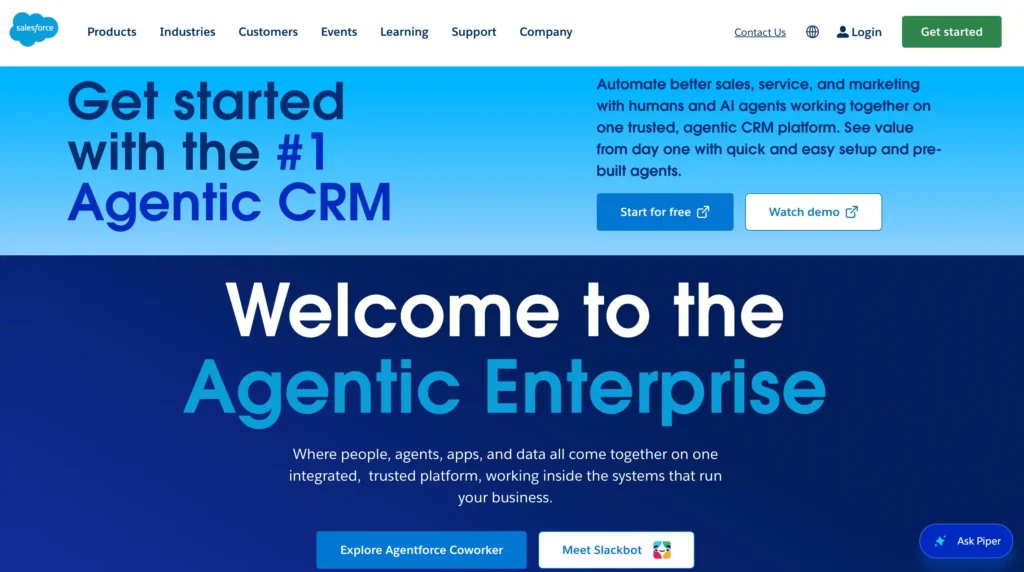
Salesforce's B2C Marketing platform, Agentforce Marketing, helps brands grow customer loyalty through agentic marketing — unifying data and turning one-way campaigns into two-way, AI-powered conversations across channels. It's built on Salesforce's Data 360 customer data platform and integrates with the broader Salesforce CRM ecosystem.
Salesforce is best suited to large enterprises that are already invested in Salesforce for sales or service, since its biggest advantage is native integration with that existing ecosystem. Smaller businesses or those not already on Salesforce will generally find the platform's complexity and cost harder to justify.
Key features:
- Data 360 (unified customer data platform/CDP)
- Agentforce Marketing (AI agents for campaign creation, personalization, and execution)
- Personalization at scale
- Customer loyalty management
- Marketing analytics
Pros:
- Deep native integration with the wider Salesforce CRM and Data 360 ecosystem, so marketing data connects directly to sales and service data
- Broad platform maturity — spans email, SMS, push, journey orchestration, personalization, loyalty, and advertising under one vendor
Cons:
- Two distinct product lines to understand: Marketing Cloud Engagement (established toolset) vs. Agentforce Marketing (newer agentic layer)
- Enterprise-oriented complexity and setup, generally requiring more implementation support than smaller platforms
Price:
Starter (Salesforce's all-in-one small-business CRM) starting from $25/User/month. For the dedicated B2C Marketing/Agentforce Marketing platform, pricing is not published and requires a sales conversations. As usage and sophistication scale up, costs rise substantially and are generally positioned toward mid-market and enterprise budgets.
Netcore Cloud — Best for ecommerce and D2C brands
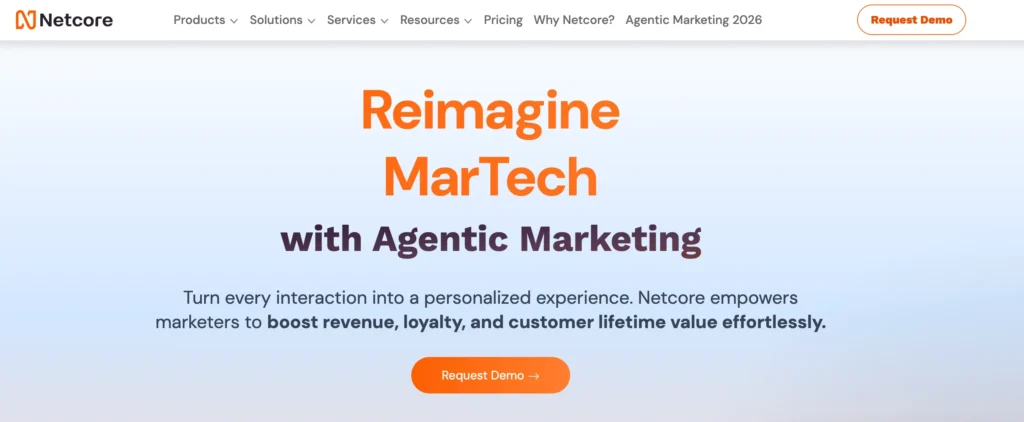
Netcore Cloud's customer engagement platform builds loyalty by delivering personalized, impactful interactions, combining data-driven journey orchestration with channels like email, push, WhatsApp, and in-app messaging. It's positioned as an AI-powered growth platform for marketers, particularly strong in ecommerce and D2C.
This customer engagement platform is especially well-suited to high-growth online retailers and D2C brands that need to run frequent, behavior-triggered campaigns across many channels at once. Its strongest brand presence and customer base are in APAC and India, which is worth factoring in if most of your audience is elsewhere.
Key features:
- Journey orchestration (drag-and-drop visual builder)
- Behavioral analytics & dashboards
- Customer segmentation
- Generative AI capabilities & agentic marketing
- Omnichannel messaging (email, SMS, push, WhatsApp, RCS, voice)
- Email API
- Basic CDP
Pros:
- Frequently cited for strong customer support and responsiveness
- Strong intuitive segmentation and personalization for behavior-based campaigns
Cons:
- Platform can be overwhelming for new users given the breadth of features
- Lack of advanced features compared to dedicated CRM/CDP solutions
Price:
No pricing shown on the website; requires a sales conversation.
Comparing push notification services on their own? Check out our dedicated guide.
Creatio — Best for mid-market and enterprise teams
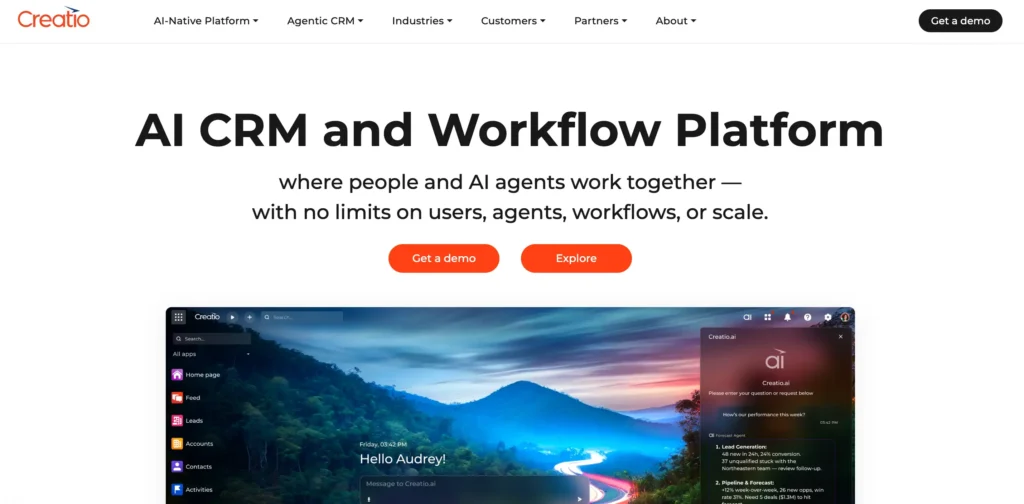
Creatio CRM is an AI CRM and workflow platform for marketing, sales, and service, built on a no-code, AI-native architecture. It combines CRM with business process automation across Sales, Marketing, and Service modules, aimed primarily at mid-market and enterprise teams with more complex workflow needs.
It works best for organizations that want to design and customize their own workflows without hiring developers, since its no-code Studio is the core differentiator. Given the $10,000/year minimum commitment, it's generally not a practical option for small businesses or teams just getting started with a CEP.
Key features:
- Sales, Marketing, and Service automation modules
- No-code Studio platform (700+ pre-built process templates)
- Conversational, natural-language CRM interface (Creatio.ai)
- Embedded AI in external apps (email, Zoom)
- Composable, add-on-based architecture
- 400+ marketplace apps and connectors
Pros:
- Highly customizable without heavy developer involvement; strong for complex, multi-team workflows
- Powerful AI features
Cons:
- Wide range of features and customization options can be overwhelming for new users
- A $10,000/year minimum initial commitment prices it out of range for very small teams
Price:
Value-based "composable" pricing — a platform tier plus product modules, support, and AI tokens, each priced separately. Starting at $40/user/month for the entry tier, with a 5 user minimum as well as a $10,000/year minimum spend for new accounts; exact pricing requires using Creatio's pricing tool or a sales conversation.
Maestra — Best for ecommerce brands wanting hands-on personalization
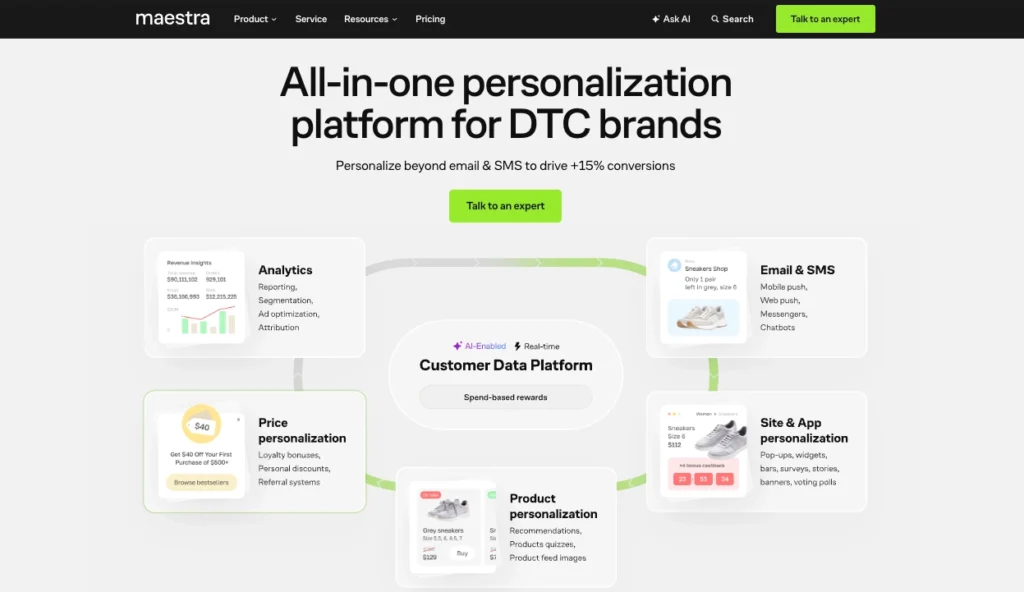
Maestra is an all-in-one personalization platform built specifically for mid-market and enterprise ecommerce brands running on Shopify, BigCommerce, WooCommerce, Magento, or custom platforms. It combines a real-time customer data platform with email, SMS, site and app personalization, product recommendations, and loyalty in a single system, backed by a dedicated Customer Success Manager for every account.
Maestra's biggest differentiator is its white-glove service model — a CSM handles migration, integration, and ongoing strategy rather than leaving setup entirely to your team. That makes it a strong fit for ecommerce brands that want deep personalization without heavy in-house technical resources, though the entry price point and lack of a self-serve plan put it out of reach for very small teams just getting started.
Key features:
- Real-time customer data platform (CDP)
- Email, SMS, MMS, RCS, mobile push, and messenger channels (WhatsApp, Telegram, and more)
- Site and app personalization (pop-ups, quizzes, surveys, banners)
- Product personalization and recommendations
- Price personalization (loyalty bonuses, personalized discounts, referral systems)
- Analytics and full-funnel reporting
Pros:
- Dedicated Customer Success Manager included for every account, handling migration, integration, and ongoing strategy
- All-in pricing with no separate charges for core modules — CDP, messaging, and personalization are bundled together
Cons:
- No self-serve or free plan — onboarding requires talking to sales rather than signing up directly
- Entry price point is high relative to other platforms in this list, pricing it out of range for small businesses
Price:
Custom, usage-based pricing tied to active customer profiles, with month-to-month billing and no long-term contract required. Per Maestra's own pricing page, plans start in the range of $1,300/month (excluding email, SMS, MMS & RCS) depending on profile volume — check Maestra's pricing calculator for an exact quote.
Benefits of using a customer engagement platform
Bringing your channels and customer data into one platform directly affects the overall customer experience and how efficiently your team can operate. Here are some of the greatest benefits of using a CEP:
Stronger customer retention & greater loyalty: Responding to behavior in real time — a follow-up after a support ticket, a win-back offer after inactivity — keeps customers engaged instead of letting them drift away silently. Customers who feel understood and well-served are more likely to stick around and buy again, rather than switching to a competitor at the first bad experience.
A more consistent experience across channels: Customers move between email, chat, and SMS without repeating themselves, because the platform carries context with them rather than treating each channel as a separate conversation.
Less time lost to switching between tools: Marketing and CX teams work from one system instead of piecing together data from separate email, CRM, and chat platforms. That means fewer exports, fewer manual updates, fewer gaps.
Faster, more relevant campaigns: Segmentation and campaign automation mean campaigns go out based on actual customer behavior, not a fixed calendar. This way, messaging stays timely instead of generic.
Clearer visibility into what's working: Centralized analytics show which channels and campaigns actually drive engagement, so decisions are based on data rather than guesswork.
Focused on SMS or WhatsApp specifically? Explore the best SMS marketing software and the best WhatsApp marketing software in our dedicated comparatives.
How to choose the right customer engagement platform
As already mentioned, the right pick comes down to your team's size, budget, and existing tools. Use these criteria to narrow it down.
Budget
Decide whether you need a predictable, self-serve price (Brevo, HubSpot's free tier) or can absorb custom enterprise pricing (Salesforce, Braze, Twilio). Don’t forget to factor in hidden costs like per-seat pricing or usage tiers that scale with contacts or message volume.
Team size and technical resources
Some platforms, like Twilio, assume you have engineering or dedicated marketing ops support to configure and maintain them. All-in-one tools, by contrast, are built so a marketer can set up campaigns and automation without writing code or waiting on a developer.
Existing tech stack
If you already run a CRM, sales tool, or CDP, check whether a new platform needs to replace it or can integrate alongside it. Brevo, for example, is built to run alongside 300+ other tools rather than force a full migration, while Salesforce and HubSpot work best when you're ready to consolidate more of your stack into their ecosystem.
Channel needs
Confirm the platform actually supports the channels your customers use — WhatsApp and RCS matter in some markets and not others, and not every platform covers every channel equally well.
Ease of setup
Time-to-value varies a lot across customer engagement softwares. Some platforms (Brevo, HubSpot) are designed to have you running campaigns within days of signing up; others (Braze, Creatio, Salesforce) typically involve weeks of implementation, often with a partner or dedicated onboarding team.
Data protection and compliance
If you have customers or contacts in the EU, check where the platform actually stores and processes data, and confirm it supports GDPR requirements (consent management, data access/deletion requests, data processing agreements). If you have customers in the US, check for CCPA compliance too, particularly around consumer data access and opt-out rights.
Find the best customer engagement platform for your business
When comparing customer engagement softwares, it's important to bear in mind your specific needs. This might be omnichannel messaging across multiple channels, deep CRM integration, or advanced AI-driven personalization.
Pricing structures vary widely across these platforms too, from self-serve monthly plans to custom enterprise quotes. Take the time to map costs against your contact volume and the features you'll actually use, not just the sticker price.
In sum: The best customer engagement platforms
When choosing a customer engagement software, you'll want to consider the following features:
- Omnichannel messaging and automation
- Unified customer data and CRM
- Personalization and segmentation
- Reporting and analytics
Some of the best customer engagement platforms include:
- Brevo: Best for growing businesses that want an all-in-one platform
- Twilio: Best for technical teams building a custom engagement stack
- Braze: Best for large-scale, cross-channel personalization
- HubSpot: Best for teams that want CRM, marketing, and service in one place
- Salesforce: Best for enterprises already in the Salesforce ecosystem
- Netcore Cloud: Best for ecommerce and D2C brands
- Creatio: Best for mid-market and enterprise teams
- Maestra: Best for ecommerce brands wanting hands-on personalization
Ready to bring your channels and customer data together? Try Brevo for free — no credit card required.