
Pardot, now officially called Salesforce Marketing Cloud Account Engagement, is a powerful B2B marketing automation platform, but it's built for enterprises and priced like it. The entry Growth plan starts at $1,250 per month billed annually, requires paid Salesforce licenses, and implementation typically runs into five figures.
For a small or mid-sized business, that's not a tool choice, it's a capital expense. Within the Salesforce Marketing Cloud family, Account Engagement sits as the B2B marketing automation platform, and it assumes you're all-in on the Salesforce ecosystem. That makes the search for Pardot alternatives as much about escaping Salesforce Marketing Cloud lock-in as about price.
The good news is that marketing automation stopped being an enterprise-only luxury years ago. Plenty of marketing automation tools now offer lead scoring and nurture sequences at a fraction of Pardot's cost, without a Salesforce dependency or a five-figure setup. This comparison covers the best Pardot alternatives for SMBs: what each is best for, what it costs in 2026, and where it beats Pardot. Treat the figures as a 2026 snapshot and confirm on each provider's site.
The information in this article was last updated on September 7, 2026.
Table of Contents
- The best Pardot alternatives at a glance
- Why look for a Pardot alternative?
- What to look for in an affordable Pardot alternative
- Our methodology at Brevo: How we tested
- 1. Brevo, most affordable all-in-one Pardot alternative
- 2. HubSpot Marketing Hub, the closest Pardot-style platform
- 3. ActiveCampaign, best for advanced automation on a budget
- 4. GetResponse, best all-in-one with webinars
- 5. EngageBay, cheapest all-in-one for tight budgets
- 6. Keap, best for small-business sales and marketing together
- 7. Ortto, best journey automation for SaaS
- More Pardot alternatives worth knowing
- How to choose the right Pardot alternative
- Why Brevo is a strong Pardot alternative for SMBs
- Getting started
The best Pardot alternatives at a glance
| Tool | Best for | Free plan | Starting price (2026) | Trustpilot rating |
|---|---|---|---|---|
| Brevo | Affordable all-in-one for SMBs | 100k contacts, 9,000 emails/mo | $9/mo (Starter) | 4.0/5 |
| HubSpot Marketing Hub | The closest Pardot-style platform | 1M non-marketing contacts, 2,000 emails/mo | $20/seat (Starter); $890/mo (Professional) | 1.5/5 |
| ActiveCampaign | Advanced automation on a budget | No free plan (trial) | $15/mo | 2.7/5 |
| GetResponse | All-in-one with webinars | 500 contacts, 2,500 emails/mo | $19/mo | 4.3/5 |
| EngageBay | Cheapest all-in-one (sales + service) | 250 contacts, 1,000 emails/mo | $14.99/user/mo | 4.8/5 |
| Keap | Small-business CRM + automation | No free plan (trial) | $299/mo | 1.1/5 |
| Ortto | Journey automation for SaaS | No free plan (trial) | $199/mo | n/a |
For a quick comparison, the table ranks these Pardot alternatives by price and use case. Below, each gets a closer look.
Why look for a Pardot alternative?
Pardot is a strong platform in the right hands. If you're a large B2B organization already running Salesforce Sales Cloud, with a dedicated marketing operations team and the budget to match, its native integration and deep lead management are hard to beat. Most SMBs are not that buyer, and the reasons to look elsewhere are concrete.
- The price. Pardot's tiers run from $1,250 to $15,000 per month, billed annually. Even the entry plan tops most SMBs' entire marketing stack.
- The Salesforce requirement. Pardot can't run standalone. You need paid Salesforce licenses on top, typically $25 to $300 per user per month.
- Implementation and complexity. Setup frequently runs into the tens of thousands of dollars, with a steep configuration curve that usually needs a consultant.
- Overkill for smaller teams. Much of Pardot's power assumes enterprise scale, and that enterprise overhead is hard to justify for a five-person marketing team. Beyond the subscription, the real cost structure includes annual billing, onboarding fees, and a steep learning curve that needs a consultant. Unless you're a Salesforce-first team wiring Account Engagement into an existing tech stack, most of that spend goes unused.
If any of those apply, one of the affordable Pardot alternatives below will almost certainly serve you better than an enterprise marketing automation platform. Most companies simply don't need Pardot's depth.
What Pardot still does well
To be clear, Pardot earns its enterprise reputation. Its native Salesforce integration gives Salesforce-first teams a unified view of engagement data and buyer behavior, advanced lead management with custom objects, and marketing performance reporting for revenue teams and marketing teams alike. For a large B2B organization deep in the Salesforce ecosystem, that data mapping without sync delays is genuinely valuable, even if it's overkill for most companies.
What to look for in an affordable Pardot alternative
The best value comes from matching the tool to how an SMB actually works. These are the key features that matter most in a Pardot alternative:
- Automation depth. Real workflow automation, lead scoring, and segmentation to nurture leads across the funnel, not just basic autoresponders. The best marketing automation tools trigger on form fills and real time engagement.
- A built-in CRM. Marketing automation works best connected to your contact and deal data, so email campaigns and email engagement sit alongside your CRM data.
- Multichannel reach. A marketing automation solution should run email marketing, and ideally SMS, across multiple channels, with dynamic content to personalize experiences.
- Content and campaigns. Landing pages, content management, and templates make launching marketing campaigns faster.
- Pricing model. Per-contact, per-user, and per-email pricing scale differently. Match the model to your list and team.
- Setup and ease of use. A user friendly platform you can configure in days, not quarters.
- A free plan or trial. Test with your own data before committing, ideally at no cost.
Our methodology at Brevo: How we tested
This article covers the best Pardot alternatives including our own platform, Brevo. Our suggestions are based on our own research and testing. We don't earn commissions from any links on this page. To learn exactly how we evaluate tools, check out our dedicated methodology article.
Please note that the features listed here are just a selection of what each software offers. For exact pricing and a full, up-to-date feature list, check the providers' websites.
1. Brevo, most affordable all-in-one Pardot alternative
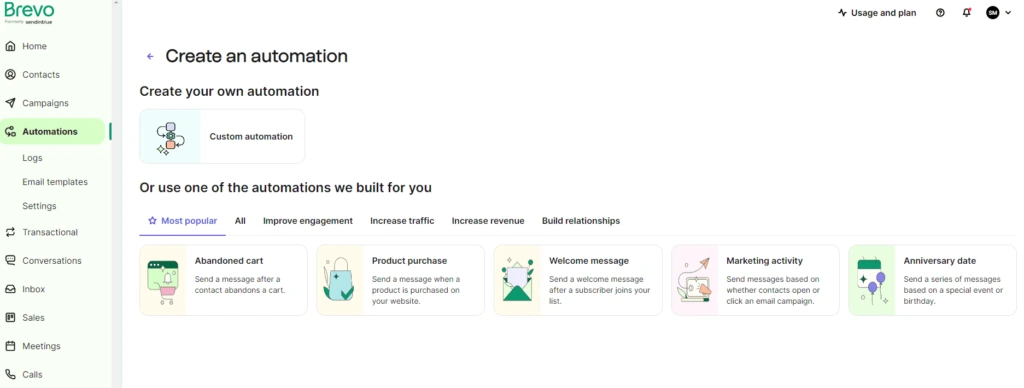
For most SMBs leaving Pardot on cost, Brevo is the natural landing spot. It bundles email marketing, SMS, a CRM, marketing automation, and landing pages in one platform, priced by emails sent rather than contacts stored. Where Pardot charges four figures a month and needs Salesforce, Brevo's automation starts at $9 a month.
- Best for: SMBs that want marketing automation, email, SMS, and a CRM in one affordable platform.
- Free plan: 300 emails/day (9,000/month) and up to 100,000 contacts.
- Pricing: Starter from $9/month (automation for up to 2,000 contacts included); the Standard plan from $18/month adds unlimited marketing automation, A/B testing, and landing pages; Professional from $499/month; Enterprise is custom.
- Pros: A fraction of Pardot's cost; no Salesforce dependency; all-in-one with a built-in sales features and CRM; set up in minutes, not months.
- Cons: Not as deep as Pardot on enterprise-grade B2B lead scoring and multi-touch attribution; marketing automation on the entry Starter plan is limited to 2,000 contacts.
How Brevo compares to Pardot
- Where it beats Pardot: A fraction of the cost, no Salesforce required, and one platform for email marketing, SMS, and CRM. Unlike Pardot, you can be sending in minutes.
- Where Pardot wins: Deeper advanced lead management and native Salesforce integration for revenue teams already in the Salesforce ecosystem.
Bottom line: the strongest pick if you want most of what Pardot does for a small-business budget. You can test it on the free plan before paying anything.
2. HubSpot Marketing Hub, the closest Pardot-style platform
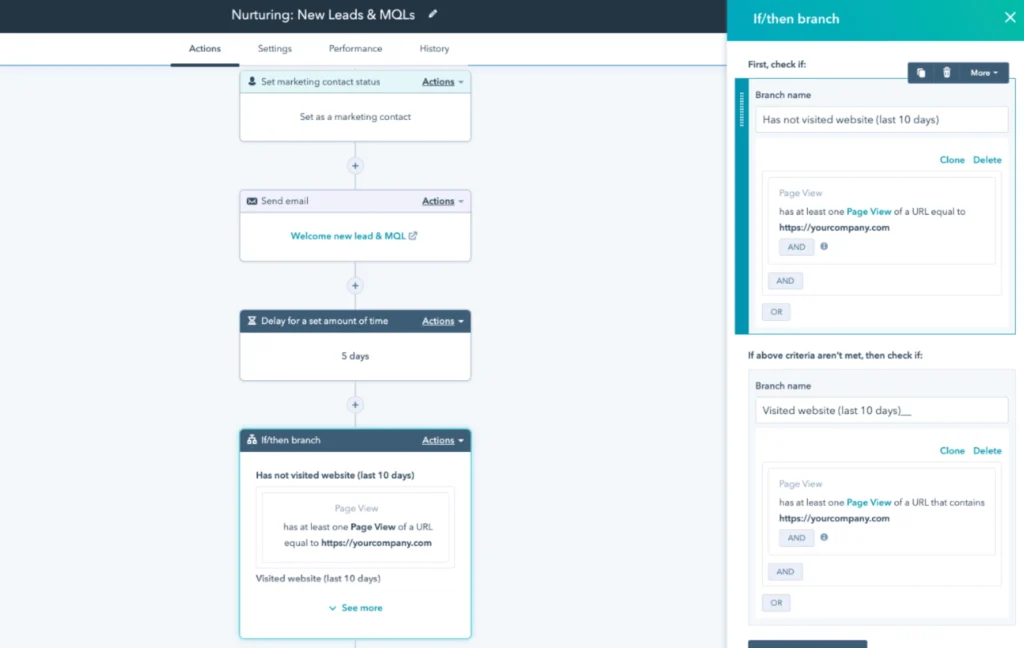
HubSpot is the most direct like-for-like alternative to Pardot, and more accessible. Its CRM is free, the Starter tier is cheap, and unlike Pardot it runs standalone with no Salesforce. The catch: HubSpot's real marketing automation lives on the Professional tier, a big jump.
- Best for: Growing teams that want a full Pardot-style marketing and CRM platform without the Salesforce tax.
- Free plan: Free CRM plus basic email marketing (1M non-marketing contacts, 2,000 emails/mo).
- Pricing: Starter from $20/seat/month; Professional from $890/month plus a one-time $3,000 onboarding fee; Enterprise from $3,600/month.
- Pros: Polished, unified platform; genuinely useful free CRM; standalone (no Salesforce); huge integration ecosystem.
- Cons: The jump from Starter to Professional is roughly 44x; a mandatory onboarding fee on Professional; billing by marketing contacts adds up.
How HubSpot compares to Pardot
- Where it beats Pardot: Runs standalone with no Salesforce, a free CRM, and a smoother learning curve. The Pardot vs HubSpot decision usually comes down to cost and simplicity.
- Where Pardot wins: Tighter native Salesforce integration for Salesforce-first teams, and no marketing-contact billing at scale.
Bottom line: cheaper and simpler than Pardot, but still a serious investment once you need full automation on Professional.
3. ActiveCampaign, best for advanced automation on a budget
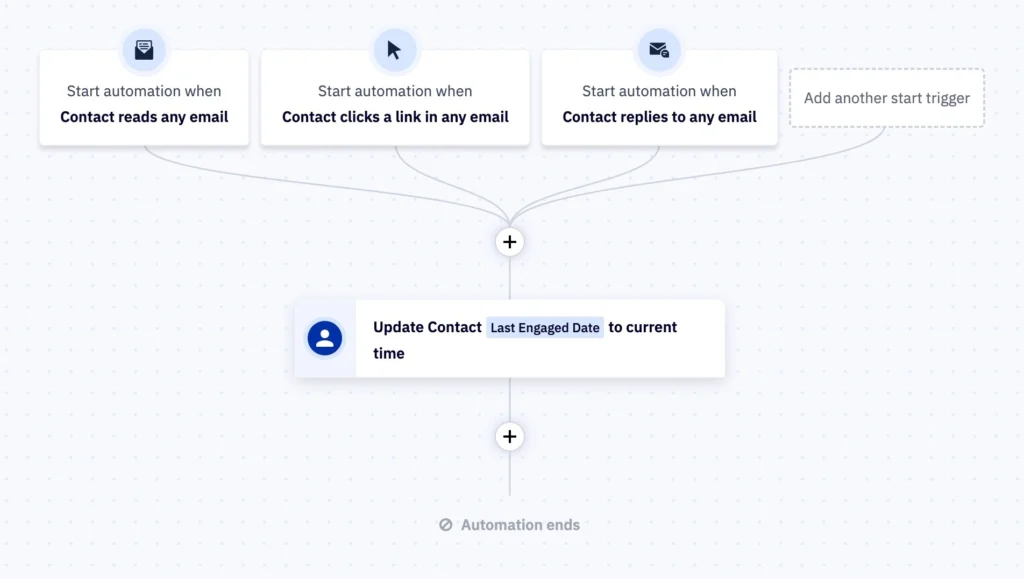
ActiveCampaign delivers the deep, behavior-driven automation Pardot buyers want, at SMB prices. Its visual builder handles complex workflows, and it includes a CRM with sales automation.
- Best for: SMBs that need sophisticated automation and lead scoring without an enterprise price.
- Free plan: None, though a free trial is available.
- Pricing: From $15/month at entry level; the popular Pro tier runs at $79/month.
- Pros: Best-in-class automation for the price; built-in CRM and lead scoring; 1,000+ integrations.
- Cons: A steeper learning curve than simpler tools; costs climb as your contact list grows.
How ActiveCampaign compares to Pardot
- Where it beats Pardot: Comparable behavioral automation features at a tiny fraction of the price, with a more customizable, user friendly experience.
- Where Pardot wins: Native Salesforce integration and enterprise reporting; the Pardot vs ActiveCampaign call hinges on whether you're Salesforce-first.
Bottom line: the closest thing to Pardot-level automation at a small-business budget.
4. GetResponse, best all-in-one with webinars
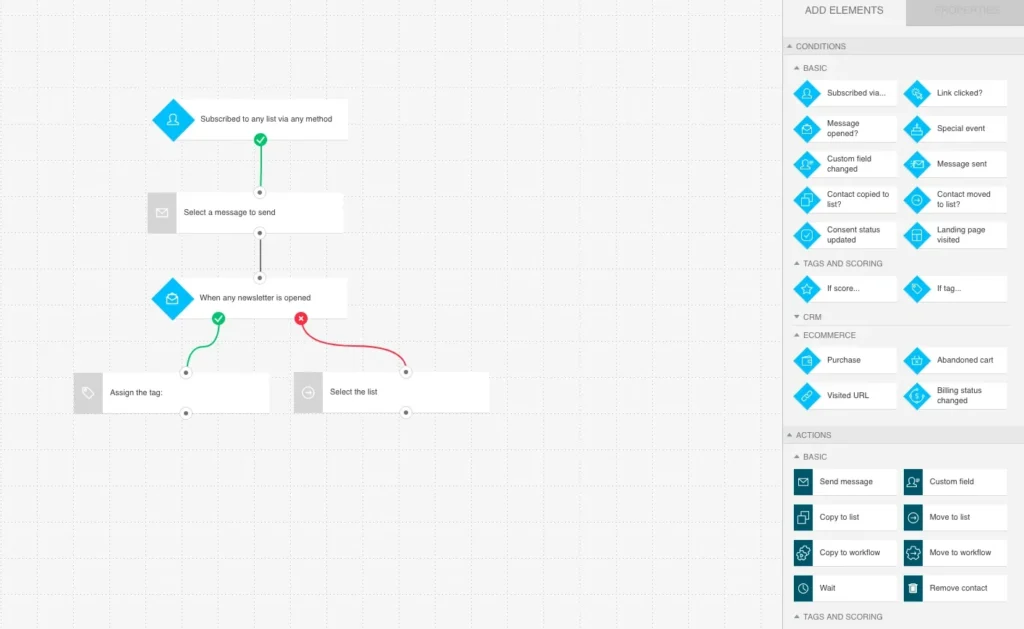
GetResponse bundles email marketing, automation, landing pages, funnels, and native webinars into one affordable platform, a strong fit for SMBs that run events or courses.
- Best for: SMBs that want automation plus webinars and funnels in one tool.
- Free plan: Up to 500 contacts and 2,500 emails/mo with limited features.
- Pricing: Starter from $19/month; unlimited automations require the Marketer tier from $59/month.
- Pros: Broad all-in-one toolkit; native webinars; AI content tools.
- Cons: Advanced automation is gated to higher tiers; contact-based pricing rises with list size.
How GetResponse compares to Pardot
- Where it beats Pardot: All-in-one marketing with webinars and funnels at SMB prices, and no Salesforce dependency.
- Where Pardot wins: Advanced B2B lead nurturing and lifecycle management for large revenue teams.
Bottom line: a versatile, budget-friendly option, especially if webinars matter to your funnel.
5. EngageBay, cheapest all-in-one for tight budgets
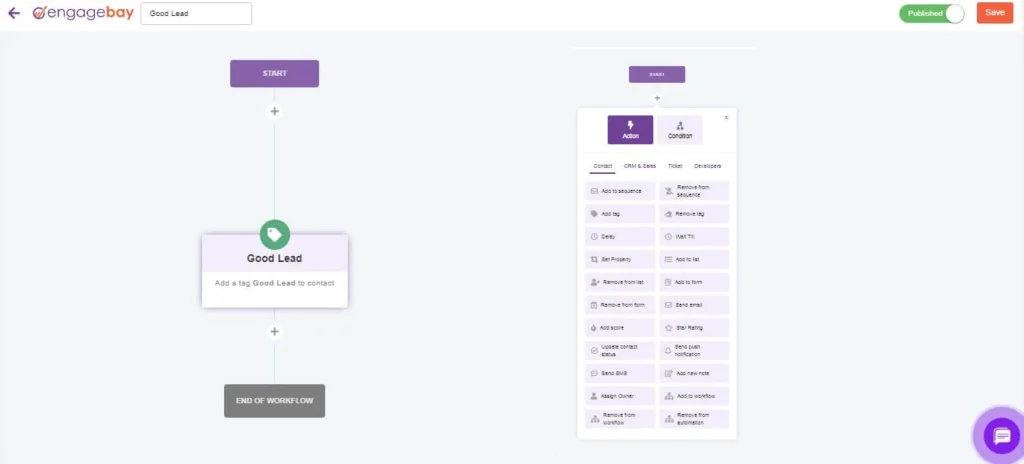
EngageBay is built for startups and SMBs that want marketing, sales, and support in one system at the lowest price. It's one of the cheapest ways to get marketing automation plus a CRM.
- Best for: Budget-conscious SMBs that want an all-in-one marketing, sales, and service platform.
- Free plan: Free forever for up to 250 contacts, 1,000 emails/mo, and 15 users, with core CRM, email, and landing pages for SMBs.
- Pricing: Basic from $14.99/user/month; Growth $64.99; Pro $119.99 (best rates on longer billing terms).
- Pros: Very low entry price; genuinely useful free plan; marketing, sales, and helpdesk bundled together.
- Cons: Per-user pricing adds up as your team grows; fewer advanced features and integrations than HubSpot or ActiveCampaign.
How EngageBay compares to Pardot
- Where it beats Pardot: Marketing, sales, and service on a single platform for a fraction of the cost, ideal for growing businesses on a budget.
- Where Pardot wins: Depth of automation features, advanced reporting, and Salesforce integration for enterprises.
Bottom line: the value champion if budget is the deciding factor and you want everything in one place.
6. Keap, best for small-business sales and marketing together
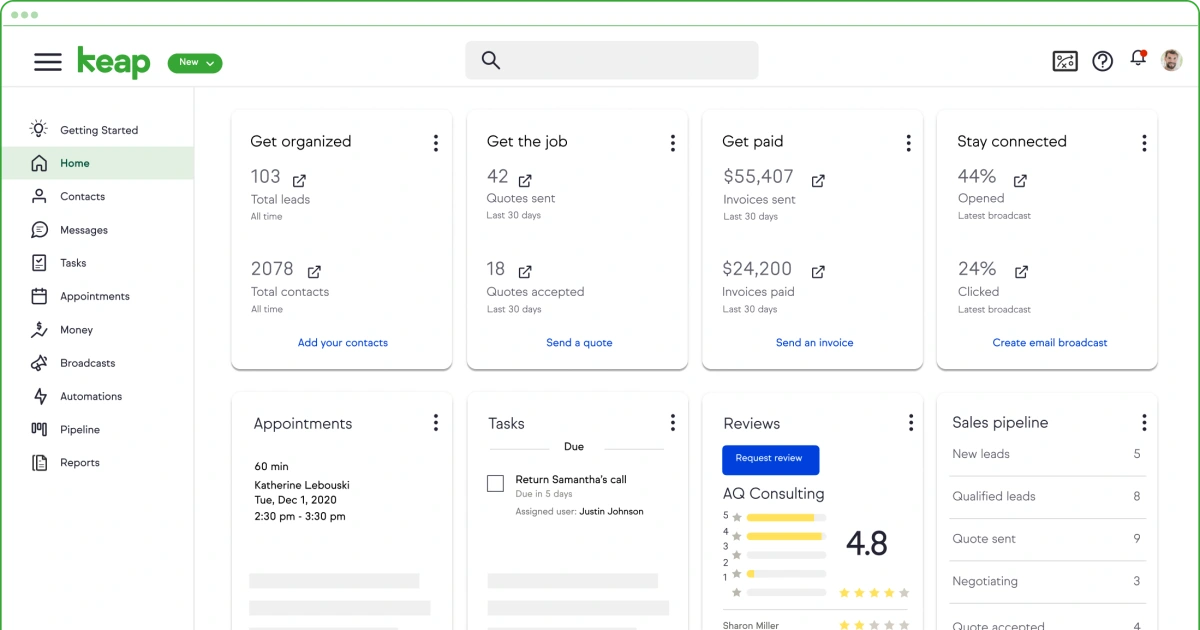
Keap targets small businesses and solopreneurs who want CRM, marketing automation, and invoicing in one tool. It's pricier to start than the others, but covers sales and billing that pure marketing platforms don't.
- Best for: Service-based small businesses that want automation plus invoicing and payments.
- Free plan: None, though a free trial is available.
- Pricing: From $299/month (annual) for 1,500 contacts and 2 users, plus a required onboarding fee.
- Pros: All-in-one CRM, automation, and payments; every feature available at every tier; strong for small-business sales follow-up.
- Cons: High entry price for a small list; a dated interface; limited reporting and integrations compared with rivals.
How Keap compares to Pardot
- Where it beats Pardot: Built-in invoicing and payments plus simple automation for small teams, without Salesforce or enterprise overhead.
- Where Pardot wins: Advanced reporting, custom objects, and controls for larger marketing and sales teams.
Bottom line: a fit for small service businesses that value built-in payments and simple automation over advanced marketing features.
7. Ortto, best journey automation for SaaS
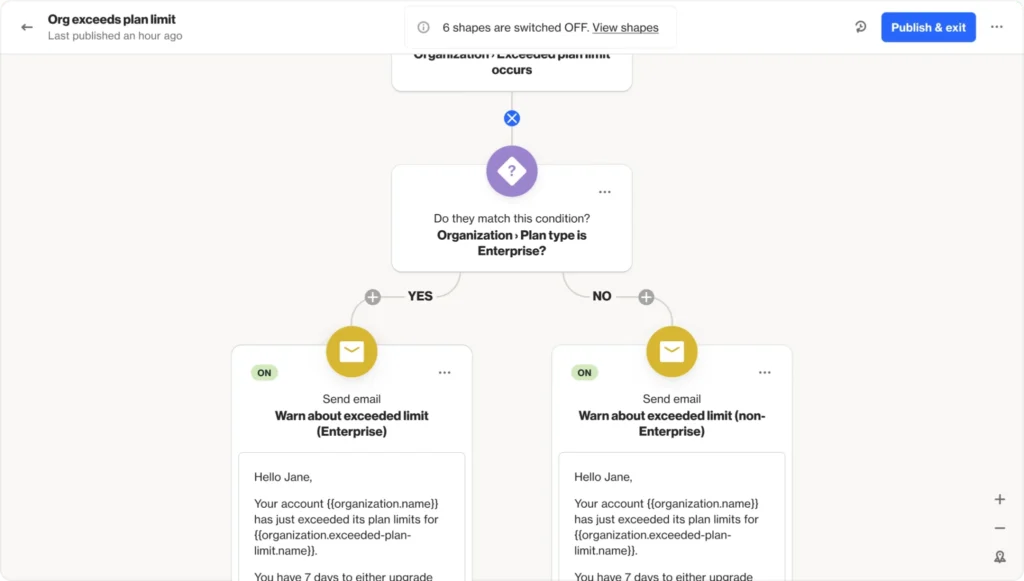
Ortto (formerly Autopilot) combines journey automation with built-in analytics, and is strong at multi-channel journeys across email, SMS, in-app, and push. It's popular with growth-stage SaaS and D2C brands.
- Best for: Product-led SaaS and D2C teams that want journey automation with analytics built in.
- Free plan: Free trial available.
- Pricing: Starter from around $199/month for 5,000 contacts; Professional and Enterprise tiers scale from there.
- Pros: Modern, visual journey builder; native analytics that reduce the need for a separate BI tool; strong multi-channel support.
- Cons: Pricier entry than Brevo or EngageBay; more than a simple newsletter business needs.
How Ortto compares to Pardot
- Where it beats Pardot: A modern journey builder with a unified view of customer data and built-in analytics, at a fraction of the price.
- Where Pardot wins: Native Salesforce integration and enterprise lifecycle management for revenue teams.
Bottom line: a modern automation-and-analytics platform for data-driven SaaS and ecommerce teams.
More Pardot alternatives worth knowing
The seven best Pardot alternatives above cover most SMB needs, but a few other platforms come up often in any honest Pardot comparison, so here are the top Pardot alternatives beyond the main list.
Marketo Engage
Adobe Marketo Engage is the other big enterprise Pardot alternative. Like Salesforce Marketing Cloud Account Engagement, Marketo Engage is a powerful B2B marketing automation platform with strong Salesforce integration, but it carries a steep learning curve and pricing that starts in the low five figures annually.
Marketo Engage is an enterprise choice, not an affordable SMB one, though it's worth knowing if your shortlist is really Pardot vs Marketo Engage.
Learn more about enterprise email marketing in our dedicated article.
Encharge
Encharge is a B2B marketing automation platform built for SaaS, with a clean, modern interface and fast Salesforce sync. It starts at $79/month with no onboarding fees, far below Pardot, and focuses on behavior-based email flows and lead nurturing. It's a strong middle option between cheap email tools and enterprise platforms.
Zoho Marketing Automation
Part of the wider Zoho ecosystem, Zoho Marketing Automation starts at $19/month and suits budget-conscious SMBs, especially those already using Zoho CRM. It covers lead qualification, drip campaigns, and multichannel outreach at a small-business price.
MassMailer
MassMailer is a 100% Salesforce-native marketing automation tool aimed at Salesforce-first teams who want an affordable alternative to Pardot without leaving the Salesforce ecosystem. If native Salesforce integration is non-negotiable but Pardot's price isn't justifiable, it's worth a look.
Mailchimp
Mailchimp is the familiar, beginner-friendly option. Its automation is lighter than Pardot or ActiveCampaign, but it's designed for quick setup and fast campaign deployment, and its free plan makes it easy to start. It fits simpler email marketing better than full B2B marketing automation.
For a wider view, see Brevo's roundup of the best email marketing platforms and its guide to CRM benefits for small businesses.
How to choose the right Pardot alternative
The best Pardot alternatives suit different priorities, so the right choice depends on yours, not the longest feature list. Compared with other platforms in the space, these stand out for value:
- Want the most affordable all-in-one? Brevo, or EngageBay if you also need a helpdesk.
- Want the closest thing to Pardot? HubSpot Marketing Hub, standalone and cheaper.
- Need the deepest automation on a budget? ActiveCampaign.
- Run webinars or funnels? GetResponse.
- A small service business that invoices clients? Keap.
- A growth-stage SaaS or D2C brand? Ortto.
One thing to weigh above the key features: none of these requires Salesforce, and all cost dramatically less than Pardot. Whether your priority is lead generation, marketing engagement, or simply email marketing a small team can run, one of these best alternatives will fit. Unlike other tools built for enterprises, they're priced for SMB marketing teams. Test one or two on a free plan first.
Why Brevo is a strong Pardot alternative for SMBs
If Pardot's price or its Salesforce requirement is what pushed you to look, Brevo answers both. It combines marketing automation, email, SMS, and a CRM in one place, runs standalone, and charges by emails sent rather than contacts stored. For a growing SMB, you get the automation that matters, nurture workflows, segmentation, and CRM-connected campaigns, at a small-business price with setup in minutes.
Be honest about the trade-off. Pardot and HubSpot go deeper on enterprise B2B attribution, and for a large Salesforce-native organization, Pardot's native integration is valuable. But for most SMBs that depth goes unused, and Brevo delivers the automation they'll actually run at a fraction of the cost.

Exceeding Expectations: A Five-Star Experience with Brevo
I recently had the pleasure of using Brevo's services, and I must say, my experience was nothing short of exceptional, meriting a full five stars. From the outset, the team at Brevo demonstrated unparalleled professionalism and dedication to customer satisfaction. Their attention to detail and commitment to providing tailored solutions truly set them apart in their field.
Bob,
Brevo user
Several Sales and Marketing Tools in One System
We stumbled upon Brevo by accident as we were using a system just for sending marketing emails. We discovered quickly that Brevo offered multiple different digital sales and marketing tools to enhance both our manual branded client engagement tasks, but also offered automation tools to aid our day to day sales efforts. Again, we never experienced any issues with the service itself. But it's great to know that Brevo's quick assistance is there if something goes wrong.
Stephen Day,
Brevo user
Brevo has most of the tools a small business needs
Brevo has most of the tools a small business needs for marketing and sales at a very reasonable price, without limiting your list growth. It has email marketing, CRM, transactional emails, SMS, live chat, Meta ad management, and WhatsApp messages. All this in a package that's easy to use and grows with your business.
Mor Mester,
Email Marketing Expert
Great range of features
We’ve been using Brevo ourselves for more than five years, and we’ve been really happy with it. It offers a great range of features (especially the automations) and makes creating beautiful emails very easy.
Robert Brandl,
Founder of EmailTooltester
Getting started
Pardot is a capable enterprise platform, but the wrong one for most SMBs, and its price and Salesforce requirement make that clear. Whichever priority matters most, price, automation depth, or an all-in-one platform, there's a well-matched Pardot alternative here at a fraction of Pardot's cost. For most companies evaluating Salesforce Pardot alternatives, one of these will do the job.
Brevo's free plan lets you try marketing automation, email, and a CRM with up to 100,000 contacts and no credit card. Import your contacts, build a workflow, and see what you can do without an enterprise contract.