
Sendy is one of the cheapest ways to send email at scale. It's a self-hosted PHP application that sends through Amazon SES, so instead of a monthly subscription you pay a one-time $69 license, host it yourself, and cover only your hosting and SES costs, about $0.10 per 1,000 emails. At 100,000 subscribers, that can mean roughly $45 a month against $800 or more on a traditional platform.
The catch is in the phrase "self-hosted." You're responsible for the server, the PHP and MySQL setup, getting approved on Amazon SES, warming up your sending, and managing deliverability yourself, with no support line to call and few of the automation and segmentation features modern platforms include.
If you love Sendy's economics but not the DIY overhead, this comparison covers seven hosted Sendy alternatives for 2026 that handle the infrastructure for you: what each is best for, what it costs, and where it beats Sendy (and where Sendy still wins).
The information in this article was last updated on Juli 27, 2026.
Table of Contents
- The best Sendy alternatives at a glance
- Why look for a Sendy alternative?
- What to look for in a hosted Sendy alternative
- Our methodology at Brevo: How we tested
- Comparison of the 7 best Sendy alternatives
- Still want self-hosted or SES-based? A few honest options
- Self-hosted vs hosted: the real trade-off
- Sendy alternatives by use case
- How to choose the right Sendy alternative
- Why Brevo is a strong Sendy alternative
- Getting started
The best Sendy alternatives at a glance
| Tool | Standout feature | Free plan | Starting price* | Trustpilot rating |
|---|---|---|---|---|
| Brevo | Hosted, low-cost, per-email pricing | 9,000 emails/mo, 100,000 contacts | $9/mo | 4.0 |
| MailerLite | Simple, clean, affordable | 2,500 emails/mo, 250 contacts | $12/mo | 4.1 |
| EmailOctopus | Closest low-cost SES-based swap | 10,000 emails/mo, 2,500 contacts | $10/mo | 4.8 |
| Mailchimp | Brand familiarity, integrations | 500 emails/mo, 250 contacts | $13/mo | 2.6 |
| Kit | Creators and newsletters | Unlimited emails, 10,000 contacts | $39/mo | 4.2 |
| ActiveCampaign | Advanced automation | 14-day trial | $15/mo | 2.8 |
| GetResponse | All-in-one with webinars | 2,500 emails/mo, 500 contacts | $19/mo | 4.4 |
Why look for a Sendy alternative?
To be fair, Sendy is excellent at what it does. The one-time license means no recurring software fee, Amazon SES is the cheapest reliable sending available, a single install can run unlimited brands (great for agencies), and self-hosting means you own your data outright. For a technical team sending high volumes of straightforward newsletters, nothing beats it on cost.
The reasons people look for a hosted alternative are just as concrete:
- It's DIY to set up and run. Sendy needs a server, PHP and MySQL, and someone comfortable configuring both. It isn't built for non-technical users.
- You manage Amazon SES yourself. You have to get approved, request limit increases, and warm up your sending gradually, or Amazon will flag you. Deliverability is on you and your domain reputation, not the software.
- No real support. There's documentation and a forum, but no support team when a campaign breaks or your server goes down at 2 a.m.
- Limited features. Sendy handles lists, campaigns, autoresponders, basic segmentation and webhook rules well, but it isn't built for behavioral triggers or the multi-step, condition-based automation workflows modern platforms offer.
- Maintenance is yours. Updates, security patches, uptime, and backups are all your responsibility.
If any of those apply, one of the hosted Sendy alternatives below trades a bit of per-email cost for zero setup and maintenance.
For marketing campaigns that map the full customer journey, hosted tools also add automation features you'd otherwise need extra tools or paid add-ons for — including paid newsletter support and connections to more SMTP providers than a self-hosted install typically allows.
What to look for in a hosted Sendy alternative
- Fully hosted. No server to run and no SES account to configure. The provider handles the infrastructure, so you can launch email campaigns and marketing campaigns fast.
- Editor and templates. A drag-and-drop editor, pre made templates, ready-to-use email templates, landing pages, and signup forms speed up every campaign.
- Managed deliverability. Strong inbox placement handled for you, with authentication in a few clicks and no SMTP server to warm up.
- Automation and segmentation. Look for automation workflows, advanced segmentation, custom fields, and contact management well beyond Sendy's basics, useful for targeted campaigns.
- Reporting. Reporting tools and detailed analytics help you improve, not guess.
- Pricing and support. Compare paid plans, a forever free tier, and real email support, none of which Sendy includes.
- Key features you'll use. SMS marketing, a landing page builder, and third party integrations matter for some teams and are noise for others.
Our methodology at Brevo: How we tested
This article covers the best Sendy alternatives including our own platform, Brevo. Our suggestions are based on our own research and testing. We don't earn commissions from any links on this page. To learn exactly how we evaluate tools, check out our dedicated methodology article.
Please note that the features listed here are just a selection of what each software offers. For exact pricing and a full, up-to-date feature list, check the providers' websites.
Comparison of the 7 best Sendy alternatives
Each platform below is evaluated on the same criteria: features, pros, cons, and pricing transparency. Here's where each one stands out.
1. Brevo, most cost-effective hosted Sendy alternative
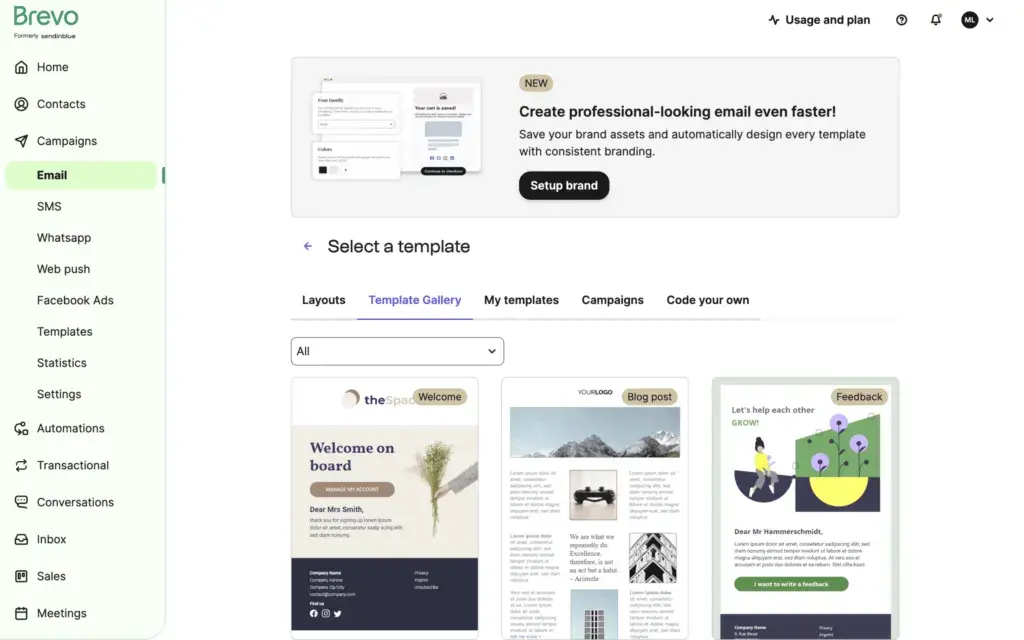
Brevo is the closest thing to Sendy's economics in a fully hosted package. It charges by emails sent rather than by contacts stored, so like Sendy you're not penalized for a large list, but there's no server to run and no SES account to manage. It also does far more than Sendy: email marketing, automation, SMS, and a CRM in one platform, with deliverability and support handled for you. A drag-and-drop editor, ready-made email templates, landing pages, and signup forms make launching email campaigns fast, with more advanced automation workflows and deeper segmentation than Sendy offers.
- Best for: Sendy users who want low, send-based pricing without self-hosting.
- Free tier: 300 emails/day (about 9,000/month) and up to 100,000 contacts.
- Pricing: Starter from $9/month; Standard from $18/month adds unlimited automation, A/B testing, and landing pages.
- Pros: Per-email pricing like Sendy; genuine free tier; automation and CRM Sendy lacks; managed deliverability and support. GDPR-compliant.
- Cons: Costs more per email than raw SES; very high-volume senders may still find self-hosting cheaper.
How Brevo compares to Sendy
- Where it beats Sendy: No server or SES setup, managed deliverability, real support, plus automation, SMS, and a CRM.
- Where Sendy wins: Rock-bottom cost at very high volume, one-time pricing, and full data ownership.
Bottom line: the best swap if you want Sendy's send-based economics without the DIY. Test it on the free tier first.
2. MailerLite, best for simple, affordable email
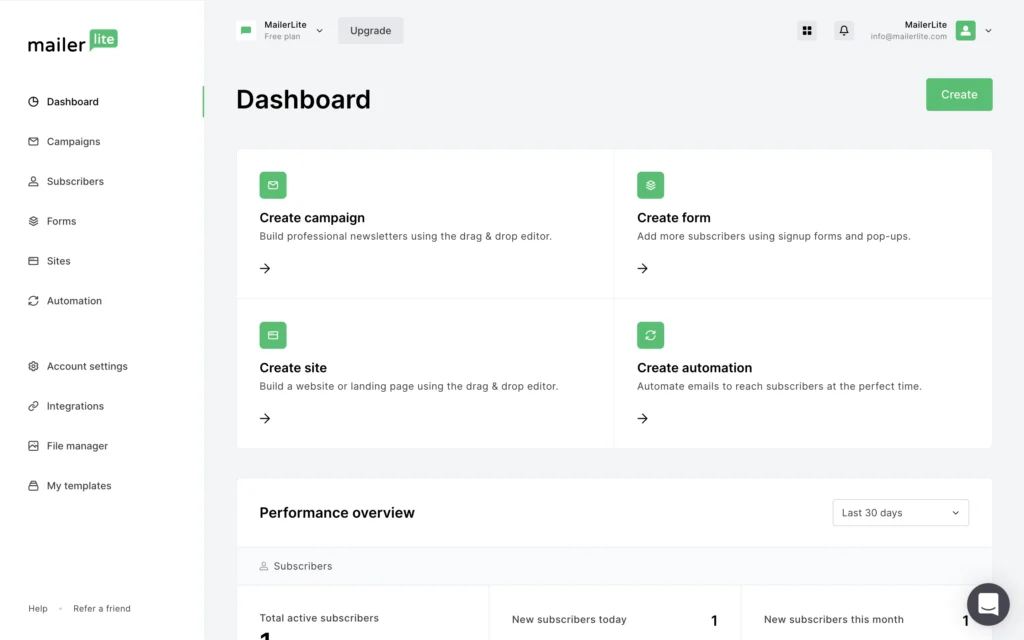
MailerLite delivers a clean, modern email tool at a low price, fully hosted. Its drag-and-drop builder is among the easiest around, and even entry tiers include email templates, landing pages, and signup forms, none of which you configure at the server level. A user-friendly interface and multivariate testing round it out.
- Best for: Small businesses that want a simple, affordable, hosted tool.
- Free tier: Yes, with a limited subscriber cap (250).
- Pricing: Paid plans start at $12/month, scaling by subscribers.
- Pros: Very easy to use; landing pages and automation included; strong value; free plan.
- Cons: Per-subscriber pricing can cost more than Sendy at scale; fewer advanced features than ActiveCampaign.
How MailerLite compares to Sendy
- Where it beats Sendy: Zero setup, a polished editor, built-in automation, and support.
- Where Sendy wins: Cheaper for very large lists, and no per-subscriber pricing.
Bottom line: the easiest hosted swap for straightforward newsletters.
3. EmailOctopus, best low-cost SES-based alternative
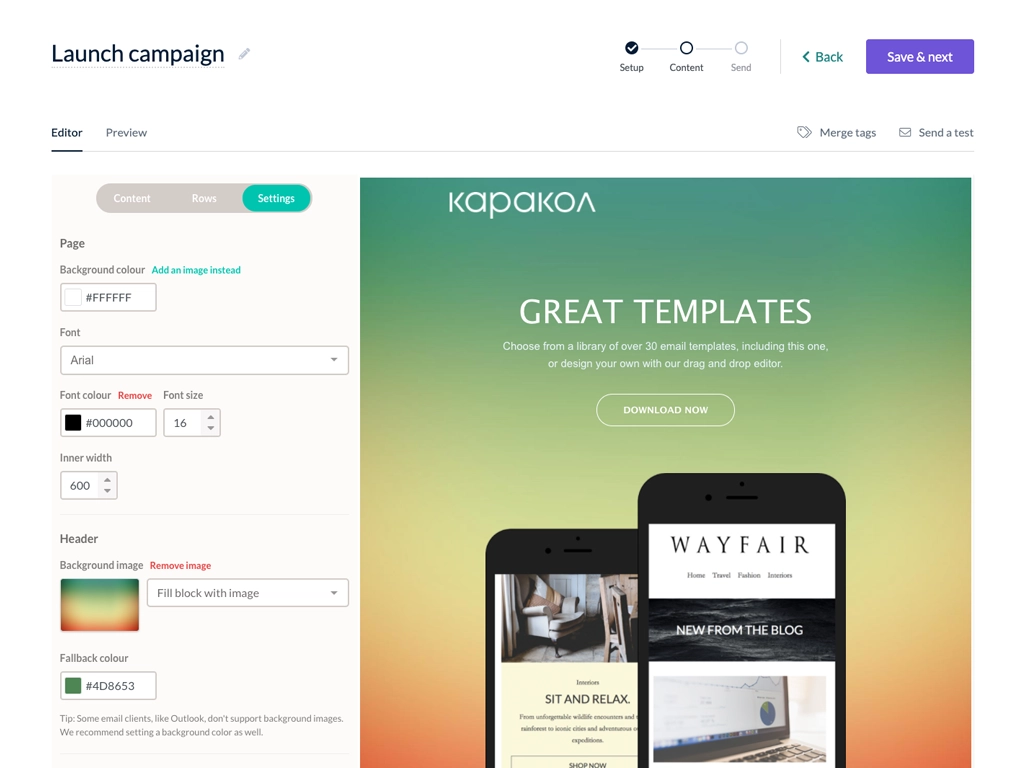
EmailOctopus is the most natural bridge from Sendy. It grew up around Amazon SES and keeps prices low, but it's fully hosted, so you get SES-style economics without configuring SES, servers, or warmup yourself. Like Sendy, it doesn't charge for unsubscribed contacts. You get a simple drag-and-drop email editor, email templates, and signup forms, sending on Amazon SES-grade infrastructure without touching an SMTP server yourself.
- Best for: Cost-conscious senders who want SES-like pricing without self-hosting.
- Free tier: Yes, up to 2,500 subscribers and 10,000 emails per month.
- Pricing: Paid plans from $10/month, scaling by subscribers.
- Pros: Very low cost; simple and clean; SES heritage without the DIY; free plan.
- Cons: Lighter on automation and features than bigger platforms; fewer integrations.
How EmailOctopus compares to Sendy
- Where it beats Sendy: SES-style low cost with none of the setup, plus a free plan and support.
- Where Sendy wins: Still cheaper at very high volumes if you can self-host.
Bottom line: the closest low-cost, hosted equivalent to Sendy's SES model.
Looking for the most budget-friendly option? See our cheap email marketing guide.
4. Mailchimp, best for brand familiarity
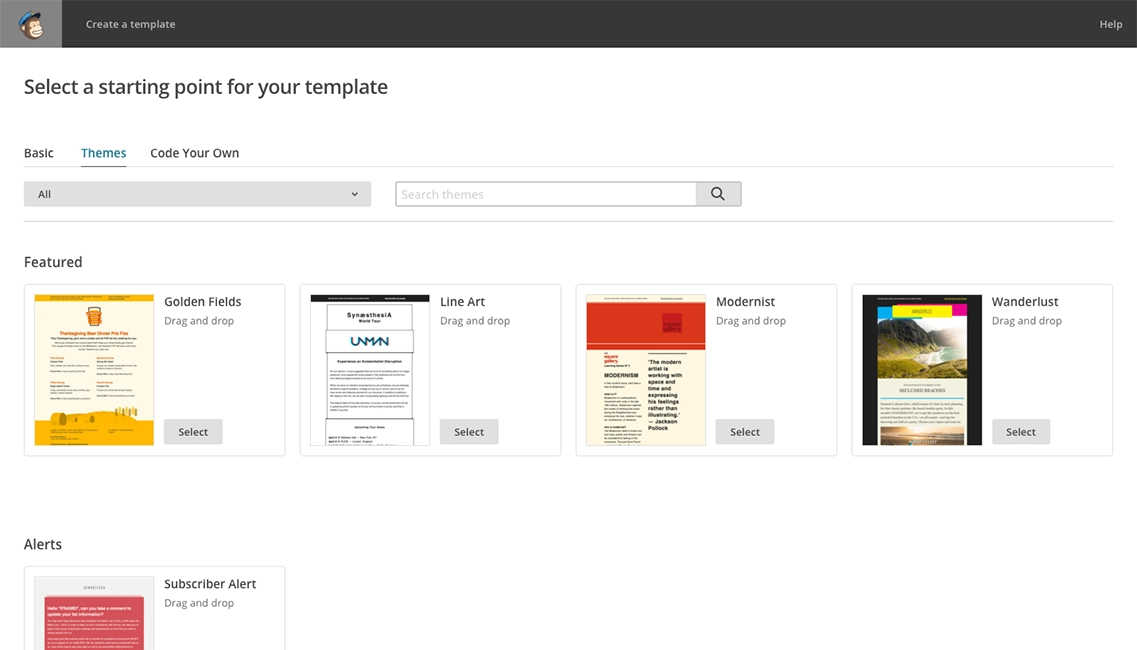
Mailchimp is the name most people know, with a huge template library and integrations with nearly everything. It's far more expensive than Sendy, but it's fully hosted and beginner-friendly. Its drag-and-drop editor, huge library of email templates, landing pages, and signup forms suit beginners, with detailed analytics and third party integrations.
- Best for: Teams that want a familiar interface and deep integrations.
- Free tier: 250 contacts and 500 sends per month.
- Pricing: Essentials from $13/month, Standard from $20/month, Premium from $350/month.
- Pros: Polished, beginner-friendly; enormous integration library; recognizable brand.
- Cons: Expensive at scale; charges for unsubscribed contacts; small free plan.
How Mailchimp compares to Sendy
- Where it beats Sendy: Zero setup, a huge integration ecosystem, and more sophisticated automation than Sendy's basic autoresponders and rules.
- Where Sendy wins: Dramatically cheaper at scale, and no per-contact billing.
Bottom line: worth it for the ecosystem, not for pure cost.
5. Kit (formerly ConvertKit), best for creators
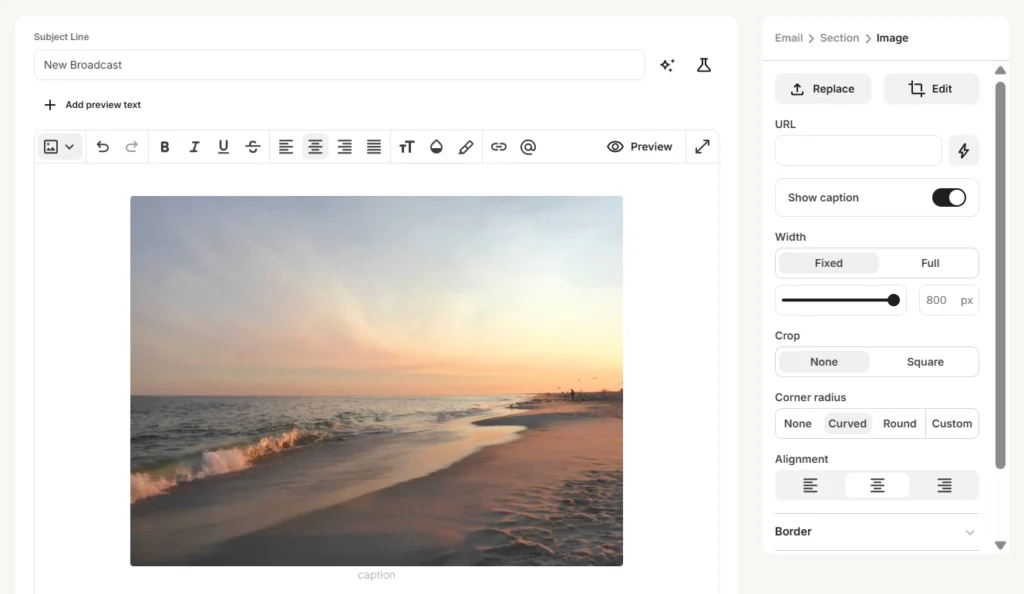
If you're a creator using Sendy for a newsletter, Kit is purpose-built for you: bloggers, newsletter writers, and course sellers who want to monetize a list. It offers tag-based automation and tools to sell digital products, all hosted. It focuses on email sequences and drip campaigns for creators, with clean email templates and signup forms rather than heavy landing pages.
- Best for: Creators and newsletter operators who monetize their audience.
- Free tier: Up to 10,000 subscribers.
- Pricing: Creator from $39/month at 1,000 subscribers, rising with your list.
- Pros: Generous free plan; creator monetization tools; clean automation.
- Cons: Gets expensive past the free tier; minimalist templates.
How Kit compares to Sendy
- Where it beats Sendy: Creator tools and monetization Sendy doesn't offer, fully hosted.
- Where Sendy wins: Much cheaper for large lists that don't need creator features.
Bottom line: the clear pick if you're a creator, not a cost-minimizer.
6. ActiveCampaign, best for advanced automation
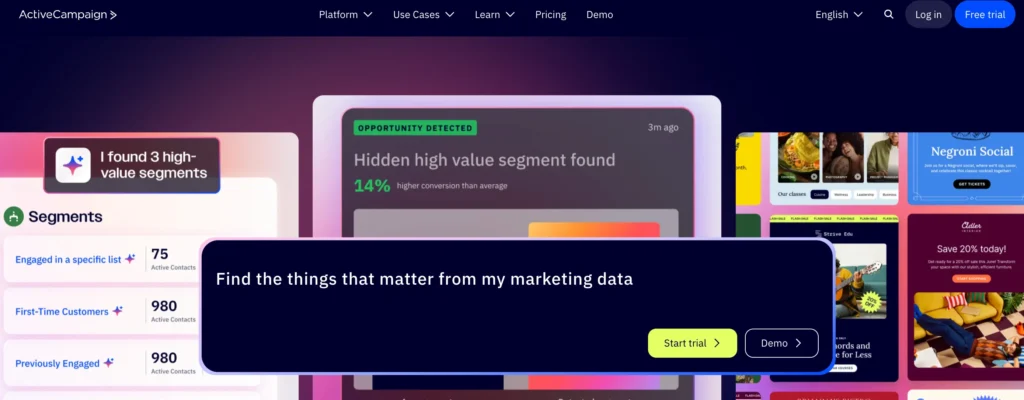
If you're leaving Sendy because you've outgrown its basic autoresponders, ActiveCampaign is the step up. Its visual workflow builder handles complex, branching advanced automation Sendy can't, mapping the full customer journey and email sequences, and it includes a sales pipeline CRM, all hosted.
- Best for: Businesses that need sophisticated, behavior-driven automation.
- Free tier: None, though a free trial is available.
- Pricing: From $15/month; the popular Pro tier runs about $79/month.
- Pros: Best-in-class automation; built-in CRM; 1,000+ integrations.
- Cons: Far pricier than Sendy; steeper learning curve.
How ActiveCampaign compares to Sendy
- Where it beats Sendy: Deep automation and segmentation well beyond what Sendy's basic autoresponders and rules can do.
- Where Sendy wins: A fraction of the cost for simple sending.
Bottom line: the pick when automation matters more than cost.
7. GetResponse, best all-in-one with webinars
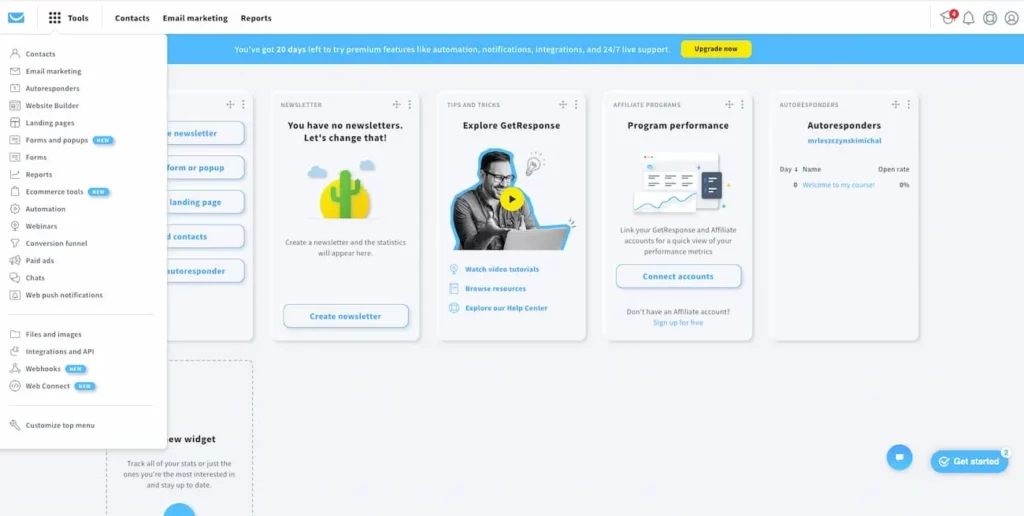
GetResponse bundles email, automation, landing pages, funnels, and native webinars into one hosted platform, a fit if you want more than newsletters. A drag-and-drop email editor, email templates, signup forms, and automation workflows support multi channel campaigns beyond email.
- Best for: Small businesses that want automation plus webinars and funnels.
- Free tier: Up to 500 contacts and 2,500 emails with limited features.
- Pricing: Starter from $19/month; unlimited automation and webinars on higher tiers.
- Pros: Broad all-in-one toolkit; native webinars; AI content tools.
- Cons: Automation gated to higher tiers; pricier than Sendy.
How GetResponse compares to Sendy
- Where it beats Sendy: A full marketing suite with webinars, hosted and supported.
- Where Sendy wins: Much cheaper for plain email at scale.
Bottom line: a versatile all-in-one, especially if you run events.
Still want self-hosted or SES-based? A few honest options
If it's Sendy's self-hosted, SES-based model you like, not just the low cost, you don't have to move to SaaS at all. A few tools keep that approach:
- MailWizz is a self-hosted email marketing app with a one-time license, more feature-rich than Sendy but with the same server responsibilities.
- Maillayer is a newer self-hosted SES frontend with a modern editor and automated warmup, sold as a one-time license.
- Listmonk is free and open-source, also SES-friendly, but more technical than Sendy.
- MailBluster is a hosted frontend for your own Amazon SES, so you keep SES pricing with less setup than Sendy.
- Mautic is a free, open-source, self hosted marketing automation platform with advanced automation features, though it needs technical knowledge to run.
- BigMailer is a hosted tool built for high-volume senders on Amazon SES, from $30/month for 5,000 subscribers, with email validation and customer support 7 days a week.
- Pabbly starts at $59/month for unlimited subscribers and allows unlimited email sending, integrating multiple SMTP providers for delivery.
- Amazon SES directly is the raw infrastructure underneath all of these, ideal for transactional emails but with no marketing features of its own.
All of these still involve managing SES or a server. If that's the part you wanted to escape, stick with the hosted options above.
Self-hosted vs hosted: the real trade-off
Self hosted software like Sendy gives you a one time payment model and full control over your own server and data, but you manage Amazon SES, an SMTP server, warmup, updates, and deliverability yourself. A one time license fee saves real money at scale, and self hosted tools appeal to teams that want data ownership and rock-bottom cost.
Hosted platforms flip that: a small per-email or per-subscriber fee in exchange for zero maintenance, managed deliverability, support, and richer features. For non technical users, or anyone who doesn't want to run Amazon SES, hosted wins easily. The right answer depends on whether the technical knowledge and time to self host is worth the savings.
Sendy alternatives by use case
Here are the best Sendy alternatives grouped by what matters most.
Best free Sendy alternative
For a forever free plan, Brevo (9,000 emails a month) and EmailOctopus (10,000 emails) lead. Each is a genuine free alternative to Sendy with no server to run.
Best Sendy alternative for automation
ActiveCampaign offers the deepest advanced automation and automation workflows, with a visual workflow builder well beyond Sendy's basic automation.
Best Sendy alternative for agencies
Sendy's multiple brands from one install appeal to agencies. For a hosted equivalent, Brevo and GetResponse support multiple brands and, on higher tiers, white labeled client accounts.
Most affordable hosted Sendy alternative
Brevo and EmailOctopus offer the most affordable pricing among hosted tools, using per-email or low per-subscriber costs rather than Sendy's self hosted model.
For a wider view, see our roundup of the best email marketing platforms as well as our guide to what email marketing is.
How to choose the right Sendy alternative
The best Sendy alternatives suit different priorities, so the decision comes down to what you want to keep from Sendy:
- Want the low cost, minus the DIY? Brevo or EmailOctopus, both hosted and send-friendly on price.
- Want the simplest hosted tool? MailerLite.
- Need real automation? ActiveCampaign.
- Run webinars or funnels? GetResponse.
- You're a creator? Kit.
- Want a familiar ecosystem? Mailchimp.
- Actually like self-hosting? MailWizz, Maillayer, or Listmonk.
Be honest with yourself about volume. If you send millions of emails a month and have the technical skills, Sendy or another SES-based tool will almost always be cheapest. If you'd rather not touch a server again, a hosted platform is worth the modest premium. These alternatives to Sendy are managed platforms, each a hosted email service built for bulk emails, and most offer more advanced features than Sendy as you grow.
Why Brevo is a strong Sendy alternative
Sendy's appeal is cost, and Brevo answers that more directly than most hosted platforms because it prices by emails sent rather than by contacts stored, just like paying per email through SES. You get a genuine free plan, low send-based pricing, and email, automation, SMS, and a CRM in one place, with deliverability and support handled for you and no server to maintain.
Be honest about fit, though. If you're a technical team sending very high volumes and you're comfortable running a server and managing Amazon SES, Sendy will still cost less, and that's a legitimate reason to keep it. But for everyone who wants Sendy-like economics without the DIY setup, Brevo is the cleaner path, which is why it tops this list.
Getting started
Sendy is a genuinely cheap, capable tool for technical senders, but the self-hosting, SES management, and thin feature set send a lot of people looking for something hosted. Whether you prioritize low cost, real automation, or an all-in-one email marketing tool, there's a well-matched alternative among these alternatives to Sendy.
Brevo's free plan lets you try hosted email, automation, and a CRM with up to 100,000 contacts and no credit card, no server required. Import your list, send a real campaign, and see how it compares.