
Run an HVAC company or a general contracting business long enough and you'll watch the same thing happen over and over: a quote goes out, the customer says they'll think about it, and three weeks later they've hired someone else because nobody followed up. Or a maintenance contract quietly expires and the customer doesn't hear from you again until they've already called a competitor. The right CRM fixes this. The wrong one becomes one more login nobody opens.
This guide compares five CRM options for HVAC contractors and construction teams.
Table of Contents
- Our methodology at Brevo: How we tested
- HVAC CRM options compared at a glance
- What is a CRM for HVAC companies and contractors?
- What to look for in HVAC CRM software
- The 5 best CRM options for HVAC & contractors in 2026
- CRM vs. field service management software: what's the difference?
- How to choose the best CRM for your HVAC or contracting business
- Getting Started
Our methodology at Brevo: How we tested
This article covers the best HVAC CRMs including our own platform, Brevo. Our suggestions are based on our own research and testing. We don't earn commissions from any links on this page. To learn exactly how we evaluate tools, check out our dedicated methodology article.
Please note that the features listed here are just a selection of what each software offers. For exact pricing and a full, up-to-date feature list, check the providers' websites.
HVAC CRM options compared at a glance
| Tool | Best for | Starting price* | Trustpilot rating |
|---|---|---|---|
| Brevo | Automated follow-up, quote reminders, affordable all-in-one CRM | Free, paid from $8.08/mo | 4.1 |
| ServiceTitan | Large HVAC operations needing full dispatch and reporting | Quote on request | 4.0 |
| Jobber | Small contractor teams needing construction CRM software | $29/mo (Core, 1 user) | 3.6 |
| Housecall Pro | On-site quoting and home service dispatch | $59/mo (Basic, 1 user) | 2.5 |
| FieldEdge | Multi-location HVAC companies already using QuickBooks | Quote on request | 1.4 |
Entry-level plans in this category tend to start around $9 to $60 a month for solo operators. Full field service platforms with dispatch and reporting built in run $150 to $600 or more depending on team size, though ServiceTitan and FieldEdge only confirm their actual number once you're on a call with sales. That's a wide enough range that it's worth narrowing down before booking a single demo. Full detail on each tool, including honest limitations, is below.
What is a CRM for HVAC companies and contractors?
Customer relationship management (CRM) software tracks every interaction with a customer, from the first phone call through the completed job to next year's renewal. If you want a fuller explanation than what's below, what a CRM is covers the basics.
For HVAC companies and construction teams specifically, HVAC CRM software usually means job scheduling, quote tracking, follow-up reminders, and recurring maintenance agreements. That's the sales and communication side of the business. It's not the same as field dispatch, even though the two get talked about interchangeably.
That distinction actually matters here more than in most industries. Plenty of what gets called "HVAC CRM software" is really full field service management software: dispatch boards, GPS-tracked trucks, on-site invoicing. A smaller slice of the market is CRM in the stricter sense, built around pipeline tracking, customer data, and automated communication rather than sending trucks to job sites. Both categories show up when someone searches "crm for hvac" or "best crm for contractors," so this list includes both. I've tried to be upfront about which is which.
Other service businesses face a similar choice — see how it plays out for CRM for real estate.
What to look for in HVAC CRM software
A quick primer if you're new to evaluating CRM software in general: key CRM benefits for small businesses is worth a read. But for HVAC and construction companies specifically, a few things matter more than the rest.
Job and deal pipeline tracking should reflect how work actually moves through your business, not a generic sales process built for software companies. That means stages like quote sent, quote accepted, job scheduled, completed, and follow-up. For more on structuring that, CRM sales management goes deeper. Automated follow-ups matter just as much. Quotes go cold because someone forgets to check in, not because customers stopped being interested, so a system that nudges a stalled quote automatically closes a real gap.
Recurring maintenance agreements deserve their own mention because they're some of the easiest revenue to lose without noticing. A CRM that can flag a contract 60 to 90 days before renewal and send a reminder without anyone tracking the date by hand turns a passive line item into active revenue. Beyond that: customer data needs to live in one place instead of one person's inbox, technicians need a mobile app for job details in the field, and someone should be able to see which quotes convert and where leads actually come from.
Not every business needs every one of these. A two-truck HVAC company and a 40-technician regional operation are shopping for different things, which is the whole reason this list doesn't crown one overall winner.
Related: Our full guide to HVAC email marketing.
The 5 best CRM options for HVAC & contractors in 2026
A few of these are full construction CRM and field service platforms with dispatch and invoicing built in. Brevo isn't one of those, and I'll say exactly where that matters.
1. Brevo — Best for automated follow-up, quote reminders & affordable all-in-one CRM
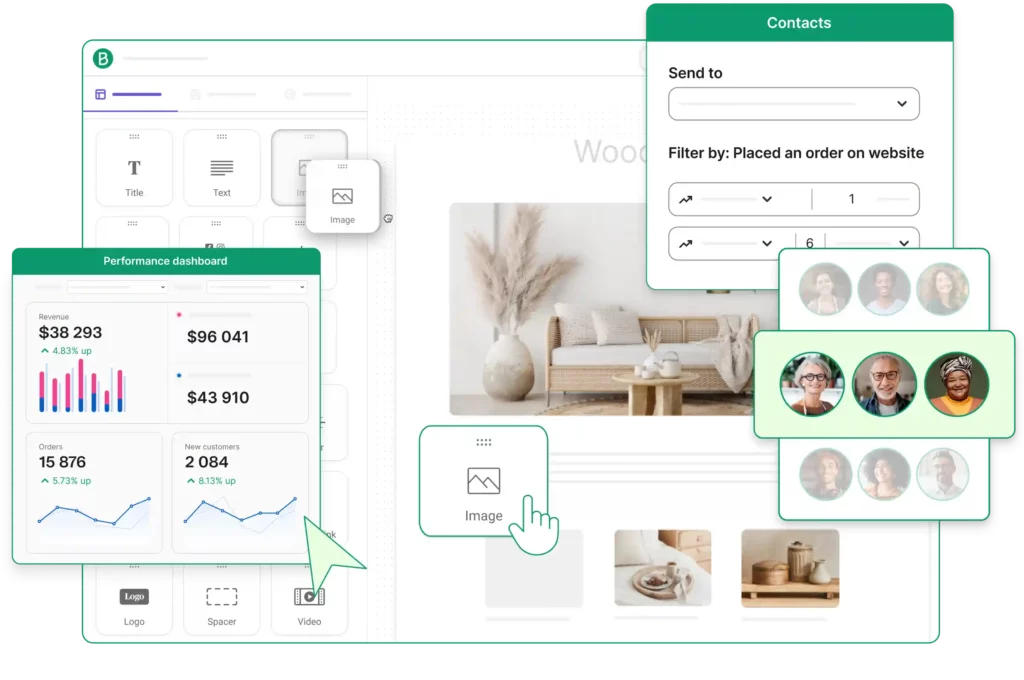
Brevo's CRM runs on customizable deal pipelines, so the stages match your actual process instead of forcing you into a template built for someone else's sales cycle. Quote sent, quote accepted, job scheduled, completed, follow-up.
Deals that go quiet get flagged automatically, and date-based automation can send a maintenance-contract renewal reminder a set number of days before it expires, without anyone having to remember the date.
What sets Brevo apart from the other four tools here is that the CRM, email, and SMS marketing live in the same system, at a lower price, without requiring a dispatch board most small operations don't need.
SMS marketing is available on every plan as pay-as-you-go credits, which is the right channel for same-day repair alerts, with an estimated open rate around 55% per Brevo's own benchmark data. A mobile app lets technicians or office staff check CRM tasks and reply to customers from the field, and calls can be made and logged directly from a deal record.
The free plan covers one pipeline and up to 50 open deals, no credit card required. Paid plans start at $8.08/month. Sales Essentials adds unlimited pipelines starting at $27.92 a month. Full details are on Brevo's pricing plans page.
Best for: This fits businesses that already have a dispatch tool, or don't need one, and are losing money to forgotten follow-ups or lapsed maintenance contracts instead. It's worth saying plainly: Brevo doesn't do dispatch, technician GPS tracking, or on-site invoicing. If that's your actual bottleneck, you need one of the platforms below, possibly running alongside Brevo for the sales and communication side.
2. ServiceTitan — Best for large HVAC operations needing full dispatch & reporting
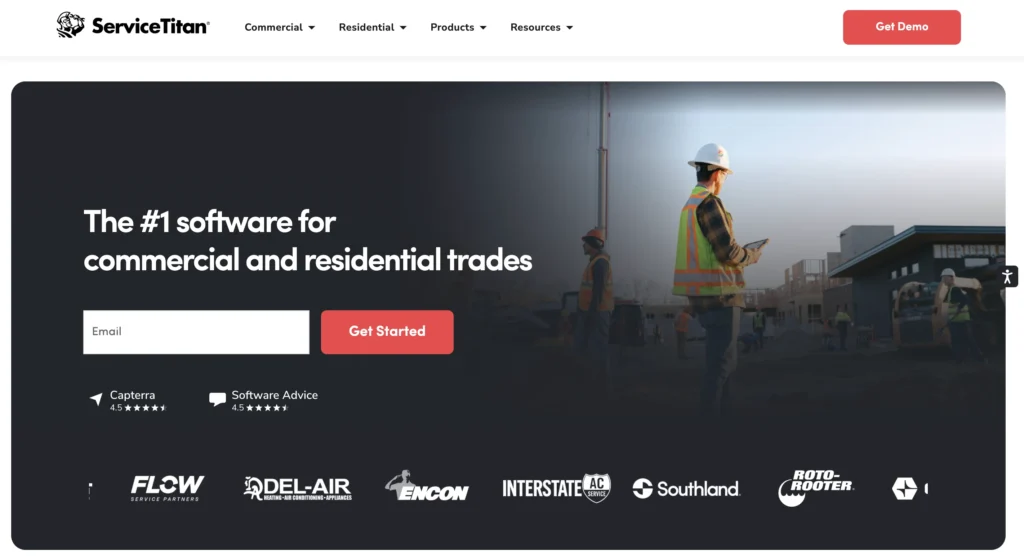
ServiceTitan bundles dispatch, invoicing, marketing, and reporting into one platform, and larger HVAC, plumbing, and electrical companies use it widely. The company doesn't publish pricing.
You go through a sales demo instead, and based on what users report afterward, expect a per-technician model somewhere in the $245 to $500 per technician per month range, plus implementation fees that can run from a few thousand dollars to tens of thousands depending on how big the company is.
Best for: ServiceTitan is designed for growing and established HVAC businesses that need advanced dispatching, reporting, and operational tools. While it can technically be used by smaller companies, its feature set, onboarding process, and pricing model are generally better suited to larger teams with dedicated office staff.
There's no free trial, pricing is only available through a sales demo, and implementation typically takes significantly longer than with simpler field service platforms. For a small HVAC business, that can mean paying for complexity and features you may never fully use.
3. Jobber — Best construction CRM software for small contractor teams
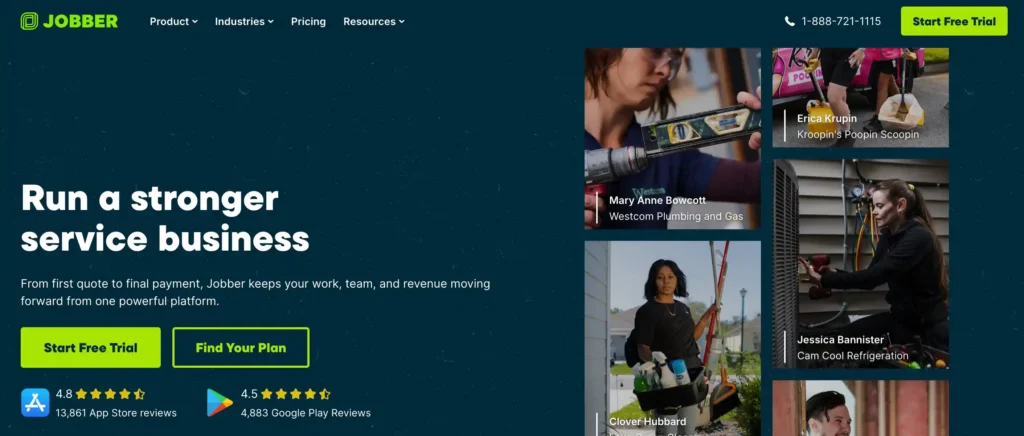
Jobber is one of the most popular field service management platforms for small HVAC and contractor businesses, covering scheduling, quoting, invoicing, and customer management. At the time of writing, Core starts at $29/month (billed annually) for one user.
If you're evaluating Jobber primarily as a CRM, it's worth noting that its dedicated sales pipeline feature, Pipeline, isn't included with the Core, Connect, or Grow plans. Instead, it's available as a $49/month add-on unless you're on the most expensive Plus plan. Two-way texting is also limited to Grow plans and above.
Best for: Jobber is a strong fit for small and growing HVAC businesses that prioritize scheduling, quoting, and invoicing alongside basic customer management. However, businesses that need more advanced CRM functionality may find that key sales features require higher-tier plans or paid add-ons, and costs increase as additional users are added.
4. Housecall Pro — Best for on-site quoting & home service dispatch
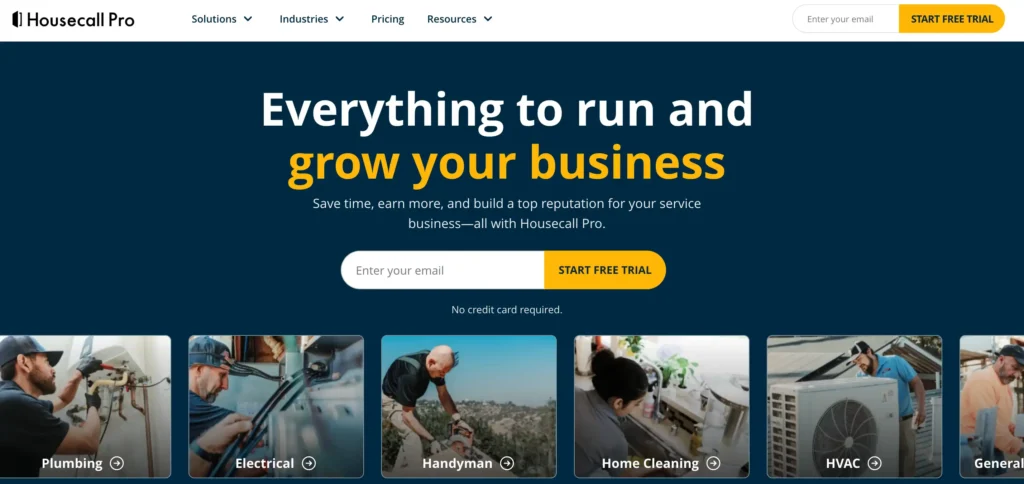
Housecall Pro is a field service management platform built for home service businesses, with strong tools for scheduling, dispatching, mobile estimates, invoicing, online booking, and payment collection.
At the time of writing, Basic starts at around $59/month for one user, Essentials starts at around $149/month and adds features such as QuickBooks integration and marketing tools, while MAX uses custom pricing for larger businesses.
Best for: It's a strong fit for HVAC contractors who want to manage scheduling, on-site estimates, invoicing, and payments in a single platform. However, Housecall Pro is designed for service businesses rather than construction project management, so it lacks many of the advanced project planning, budgeting, and collaboration features needed for complex, long-term construction jobs.
While it includes customer management capabilities, its CRM and sales automation features are more limited than those of dedicated CRM platforms.
5. FieldEdge — Best for multi-location HVAC companies already using QuickBooks
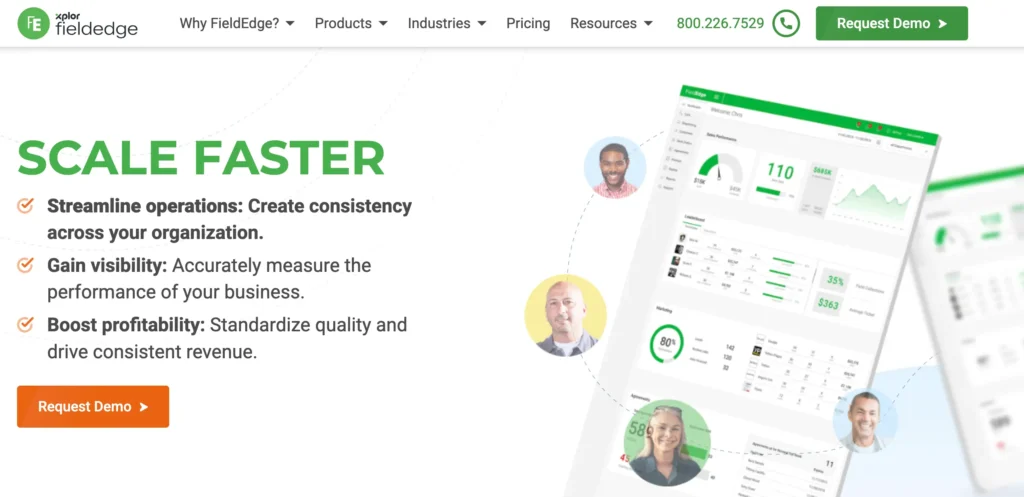
FieldEdge is a field service management platform built specifically for HVAC, plumbing, and electrical businesses. It offers deep QuickBooks Desktop and Online integration, along with robust scheduling and dispatch tools for coordinating technicians across service areas.
Like ServiceTitan, FieldEdge doesn't publish its pricing. Quotes are provided through its sales team, and third-party estimates vary widely depending on business size and selected features. There's no free trial, and implementation typically involves onboarding and training before the platform is fully deployed.
Best for: FieldEdge is a strong choice for established HVAC businesses, particularly those already relying on QuickBooks for accounting. However, prospective customers should expect custom pricing, a more involved implementation process than lighter-weight field service platforms, and fewer publicly available customer reviews than some of its larger competitors.
CRM vs. field service management software: what's the difference?
Worth spelling out, because the terms get used interchangeably in this space and that's where a lot of buyers waste money. A CRM focuses on customer relationships, deal stages, and communication, the sales process. Field service management software adds dispatching, technician routing, on-site invoicing, and often payroll or inventory tracking on top.
ServiceTitan and FieldEdge are FSM platforms with CRM features folded in. Brevo is CRM and marketing software that some HVAC companies pair with a separate dispatch tool, or just use on its own if dispatch was never the bottleneck. If you want a broader comparison across CRM types outside this niche, the 8 best CRM software for small business and this best CRM software roundup both go wider than HVAC.
If your problem is job-site coordination, which truck goes where, GPS tracking, on-site payment collection, you need FSM software, full stop. If your problem is quotes going cold, contracts lapsing, or customers not hearing from you between visits, that's a CRM and marketing automation problem, and it's usually a narrower and cheaper one to solve. Other service businesses face the same fork in the road.
CRM for consulting firms walks through how the same logic plays out in a different industry.
How to choose the best CRM for your HVAC or contracting business
Start with whether you actually need dispatch and job-site management, or whether the real gap is customer communication and follow-up. These are different jobs, and paying for both when you only need one usually means overpaying for features that sit unused.
Team size matters more than it looks like it should. Per-technician and per-user pricing models, which is how ServiceTitan, FieldEdge, and Jobber's team plans work, scale fast with headcount. Model this out two or three years ahead, not just against your current team.
Budget deserves an honest look too. A $30 a month plan and a $400 a month platform aren't really competing for the same buyer, so make sure the jump in price is buying something you'll use, not just a slicker sales demo. And if you're already running QuickBooks or another accounting tool, confirm the integration actually works cleanly before signing anything. A few of the tools on this list charge extra for it or need workarounds to make it stick.
For a broader framework beyond HVAC specifics, see how to choose a CRM for your business.
Getting Started
If dispatch and job-site coordination are already handled, or you're small enough that you don't need them yet, setting up a basic quote-to-job pipeline in Brevo with automated follow-up reminders takes less than an hour.
The free plan covers one pipeline and up to 50 open deals with no credit card required, which is enough to test whether the workflow actually fits before paying for anything. Take a look at Brevo's sales features to see the full feature set.