
Your customers can do much more than spend. Loyalty programs that reward participation can improve business outcomes and customer relationships.
The problem with loyalty programs today
Every CEO should be customer-obsessed. Yet most loyalty programs are designed around what businesses want: "How do we make customers spend more?"
Here's the problem with putting transactions at the center of loyalty programs.
- Customers don’t want to spend to…spend more.
If a customer spends $200 on a winter coat and all that gets them is halfway towards 10% off, they’re going to take advantage of someone else’s 15% welcome offer when they need their next outfit. Even if your competitor costs more, the perceived savings are compelling.
Boston Consulting Group found that 35% of consumers planned on cancelling memberships in 2024 because rewards aren’t compelling enough.
Your program needs to build incentives along the way that aren’t tied to transactions if you want to keep them around for the long haul.
- Loyalty is not transactional.
If someone spends less this year than last year, are they less loyal to your brand? Or have their personal finances or lifestyle changed?
Even in categories with frequent purchases, spending is an unreliable signal. If a daily coffee customer stops buying for three months, it doesn't mean they've found a new brand—maybe they're traveling, working abroad, or taking a break. But most loyalty programs would read that as churn.
But if that coffee customer is still tracking their fitness goals (aligned with your "powering your health" mission), they're still loyal—their circumstances just changed. If the fashion customer is still opening emails or participating in contests, they're still connected—they just don't need a new coat right now.
Transactions only measure need.
- Customers have more to offer than their credit cards.
Customers can show loyalty in many ways - by posting content on social, leaving a review, or referring a friend.
A customer who spends $500 shouldn’t get the same recognition as someone who spends $500 and shares their shopping haul with their Instagram friends.
Both are valuable, but spend-based programs treat them identically when one customer is also acting as a marketing channel. You need to reward engagement.
Focusing on rewarding engagement can help turn those silent spenders into advocates, while also introducing your brand to your best customers’ networks - all without the ad spend.
To build loyalty, you need to reward it.
A smarter loyalty model - rewarding engagement
To keep customers coming back between purchases, you need to reward everyday participation.
Posting UGC, entering contests, and visiting stores are all examples of interactions that customers can do without having to spend a penny. Customers have more incentive to engage, and businesses earn higher ROI through lower CAC and improved retention.
So, how can you get started?
Meet customers where they’re active
Your customers are already posting stories, leaving reviews, sharing unboxings, and referring friends. Among 25-34 year olds,
- 45-55% follow brands on social media
- 30-40% like, comment, or share brand posts
- 20-25% post reviews or user-generated content
Customers can help you drive acquisition, build social proof, and create content without the ad spend.
By rewarding every customer—whether they post a story, leave a review, or enter a contest—you turn your entire customer base into a marketing engine.
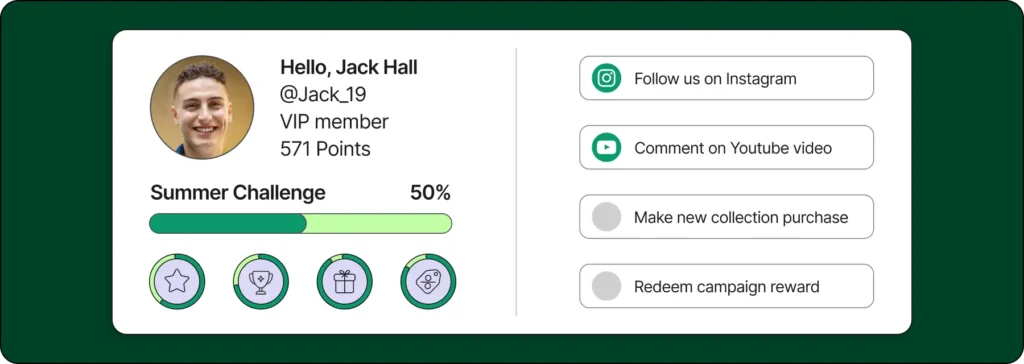
Integrate participation
Platforms like Brevo's Social Engagement Module are helping brands integrate customer behavior into loyalty programs. They enable businesses to track any action (not just purchases), reward those actions, and gamify participation to keep customers engaged all year long.
With smart loyalty in place, businesses can launch:
- Social media challenges: Customers earn points for posting an Instagram story, TikTok reel, YouTube video, etc., tagging your brand with dedicated hashtags.
- Athletic challenges: Customers earn points for achieving fitness goals (ie, running 10K on Strava or Garmin).
- In-store surprises: Scavenger hunts or store visit rewards make in-store shopping exciting and drive traffic.
- Referral incentives: Happy customers who engage become your best recruiters
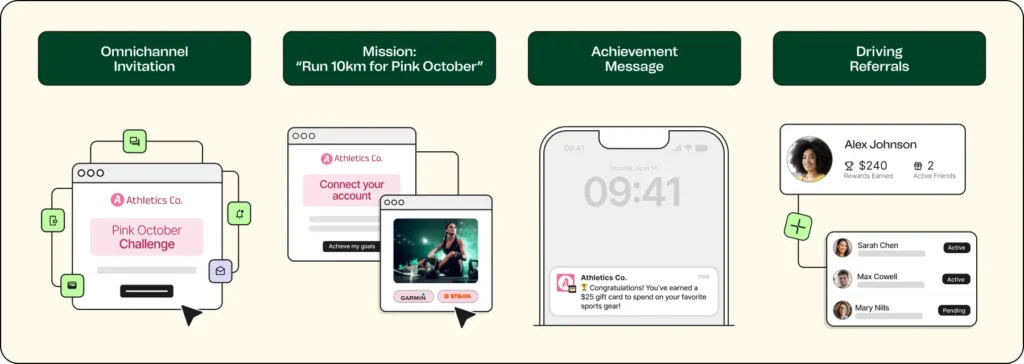
An example loyalty journey built around participation.
Get results
Brands using engagement-based loyalty see measurable impact:
- +18% purchase frequency
- +28% more active loyalty program customers
and a community that markets for you.
Your customers are already engaging. The question is whether you're recognizing it, or still waiting for the next transaction.
Ready to move your program forward?
We collaborated with Scott Brinker (Chiefmartec) to bring you a guide on how to put smart loyalty and retention loops in place, including practical steps to launch something you can actually measure. All the answers for building real loyalty are right inside.


